


Falling in Love With the Future
Publicado originalmente por Alianza Pachamama.
During New York Climate Week, Manhattan becomes a whirlwind of panels, workshops, policy conversations, strategy sessions, technology innovations, and big ideas. Across sectors—from corporations and philanthropy to governments and grassroots movements—thousands of people gathered to wrestle with the climate crisis and what can be done.
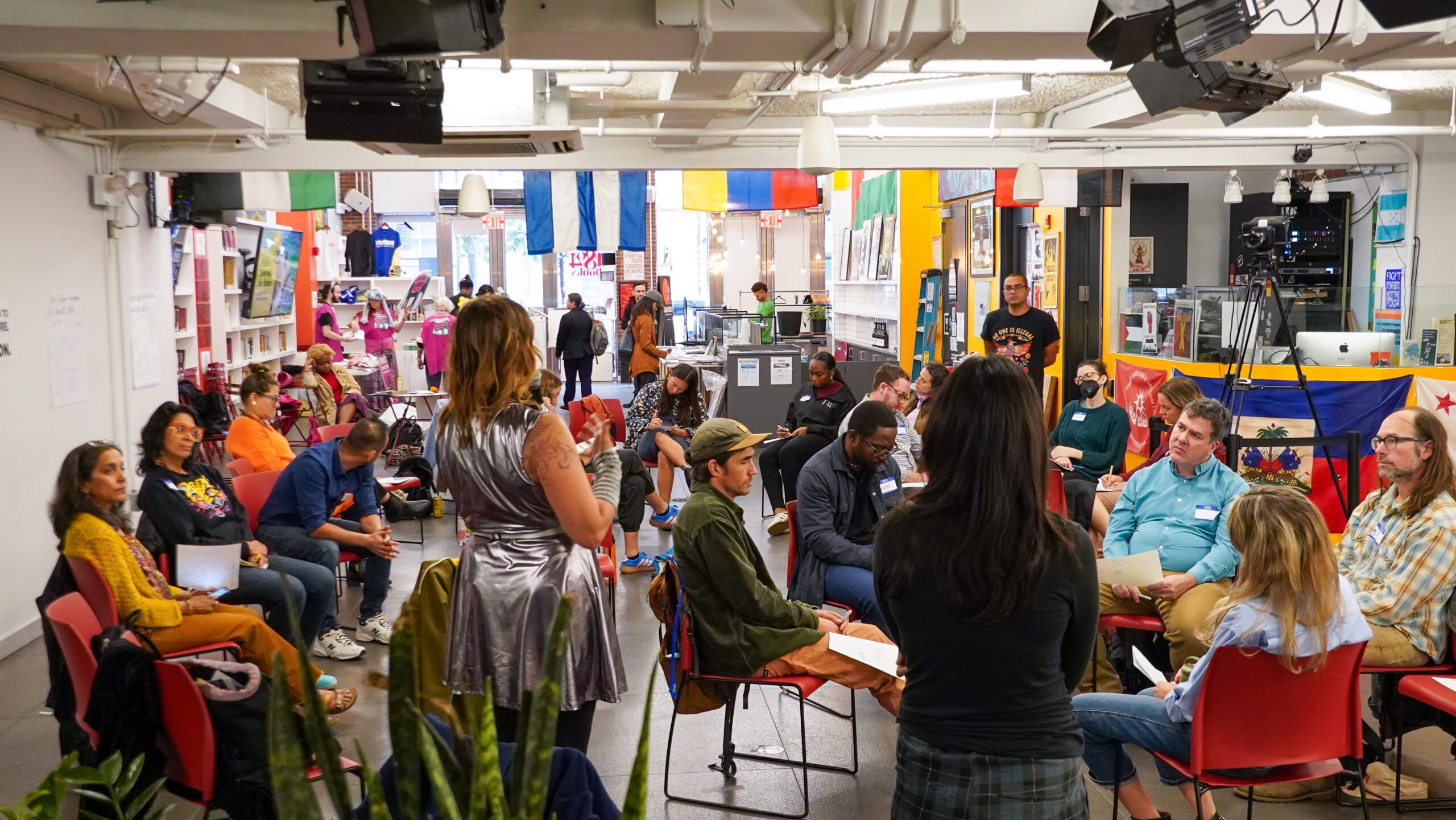
In the midst of all that thinking, talking, strategizing, and ideating, Pachamama Alliance and Amigos de la Tierra EE. UU. invited a group of 30 people to slow down, feel into their hearts and dream. Held on September 24, at the People’s Forum, Falling in Love with the Future: A Participatory Visioning Workshop, invited participants to move beyond analysis and enter one of many possible futures through their hearts, bodies, senses, and radical imaginations. Together, we explored the question: What is the future we long for and can we fall deeply enough in love with it to help bring it into being?
We told participants that, through the work of reconnecting with our Earth-honoring ancestral lineages and traditions, we had discovered a form of “AI” that would allow us to travel through time—not through Artificial Intelligence, but via Ancestral Intelligence. We discovered a way to travel through time, not by entering a machine, but by accessing a portal through the heart. In order to travel through it, however, the heart needs to be open, strong, and spacious enough to carry us. We would engage in practices of gratitude and grief as a way of preparing our hearts for the journey.
The experience drew from Joanna Macy’s Work That Reconnects, moving through the four stages of the Spiral: gratitude, honoring our pain for the world, seeing with new and ancient eyes, and going forth. We grounded ourselves in gratitude for all that we love in this extraordinary living world, then shared what was breaking our hearts in these times, recognizing that our grief is inseparable from our love and interconnectedness.
Inspired by Rob Hopkins’ book How to Fall in Love with the Future: A Time Traveler’s Guide to Changing the World and traditions such as Afrofuturism that reclaim our capacity to envision radically different worlds, we also needed to prepare for the trip by activating our senses.
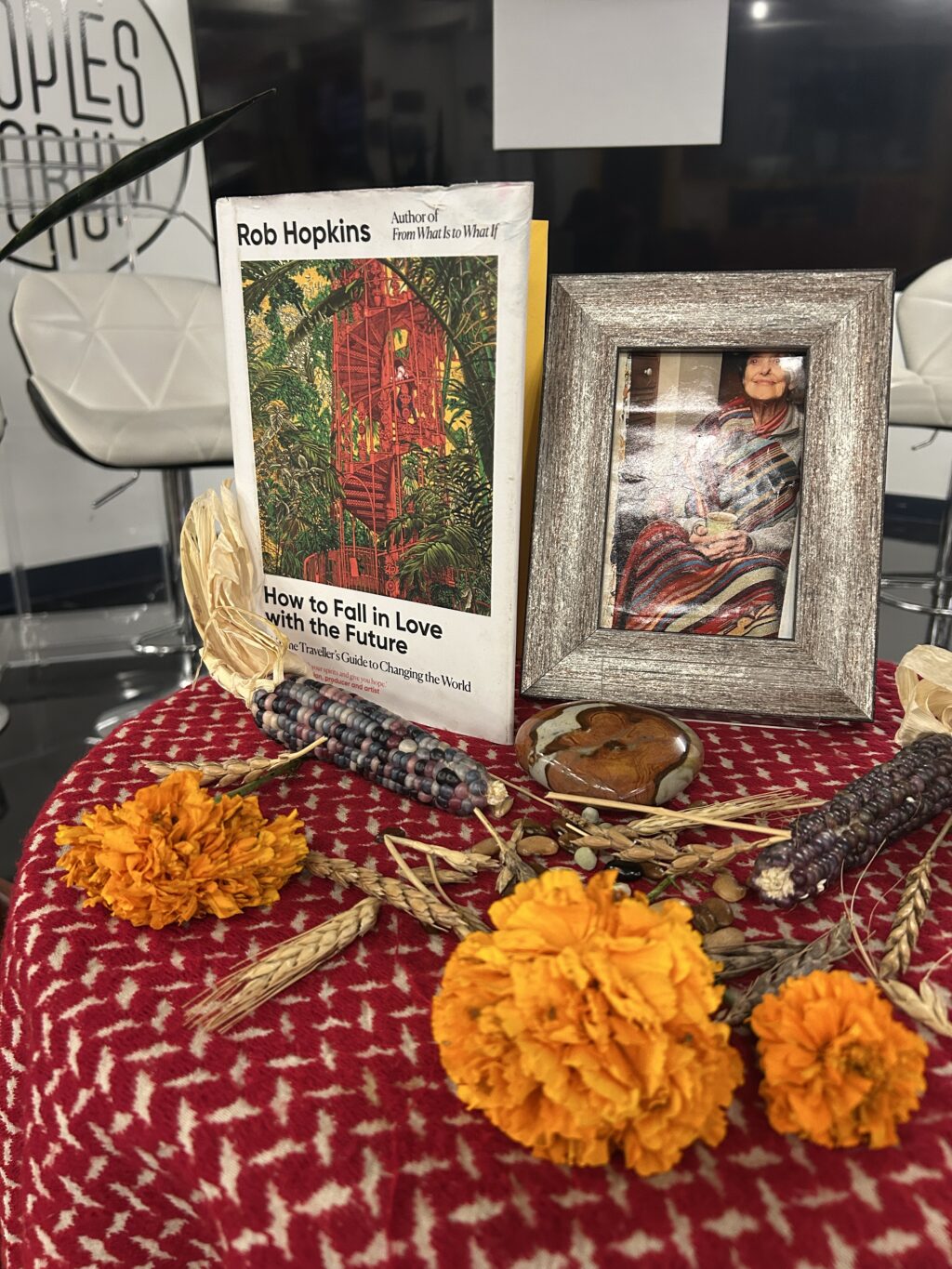
To sufficiently activate their hearts longing—we also shared inspiring stories that we had seen in 2050: In Ethiopia, ancestral agroforestry practices were restoring soils and spreading to arid regions around the world. In Brazil, school meals sourced from local agroecological farms had transformed food systems. In Mexico, soil restoration and the banning of pesticides and GMO corn had helped landscapes and communities flourish. Cities had become greener as depaving movements spread across the world, planting trees and orchards, and building trams, bike paths, public transit and walkways to connect neighborhoods, minimizing the need for cars. And the beavers had returned, restoring wetlands, slowing water, reducing floods, and reminding humans that we didn’t have to engineer every solution ourselves!
The Future Ones wanted the participants to know before traveling that everything was not perfect in 2050. They were still living with climate change and the consequences of centuries of extraction and pollution. There had been tremendous loss and difficult years. But humanity had changed direction. Communities had built strong networks of mutual aid and learned how to care for one another through the hard times. Enough people and communities had begun putting life, kinship, and reciprocity at the center of everything.
Then it was the participants’ turn to travel through the heart and the ancient technologies of love and sound vibration. Together, as ancestors from 2026, we passed through the portal into 2050 by feeling our heart’s longing and humming together—arriving into a possible future in which humanity had done everything it could to bring about an ecological civilization. Participants were invited to see, hear, smell, taste, and feel this world, to be received by the Future Ones and to invite a message, inspiration, story or guidance to carry home.
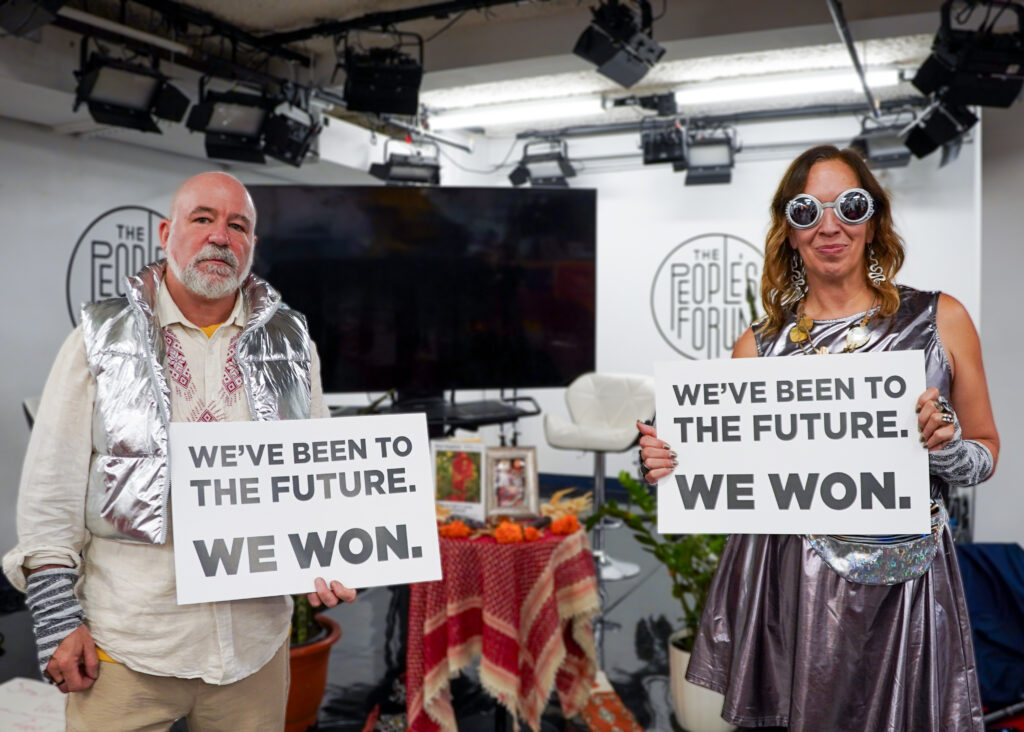
Identifying themselves to be traveling as ancestors of the future shifted the experience. The people of 2050 were no longer abstract “future generations,” but descendants—people to whom we are connected and for whom our choices and actions of today matter. That visceral sense of relationship helped transform our moral imagination into a sense of sacred responsibility.
The workshop offered a felt experience of radical hope: not a certainty that everything will turn out as we wish, but a deeper connection to what we love and what is still possible. As Pachamama Alliance co-founder Lynne Twist often says, “Pain pushes until vision pulls.” Having felt the pull of a future worth loving, participants left with a commitment and an inquiry to live into: What can I do, right here in 2026, to begin practicing and embodying that future now?
Publicaciones relacionadas
Formas de apoyar nuestro trabajo

Lea las últimas noticias
Manténgase informado e inspirado. Lea nuestros últimos comunicados de prensa para descubrir cómo estamos contribuyendo al planeta.

Vea nuestro impacto
Vea las verdaderas victorias que su apoyo hizo posibles. Lea sobre los triunfos de campaña por los que hemos luchado y ganado juntos.

Dona hoy
Contribuye a impulsar el cambio. Se necesita el apoyo de defensores del medio ambiente como tú para construir un mundo más sano y justo.