


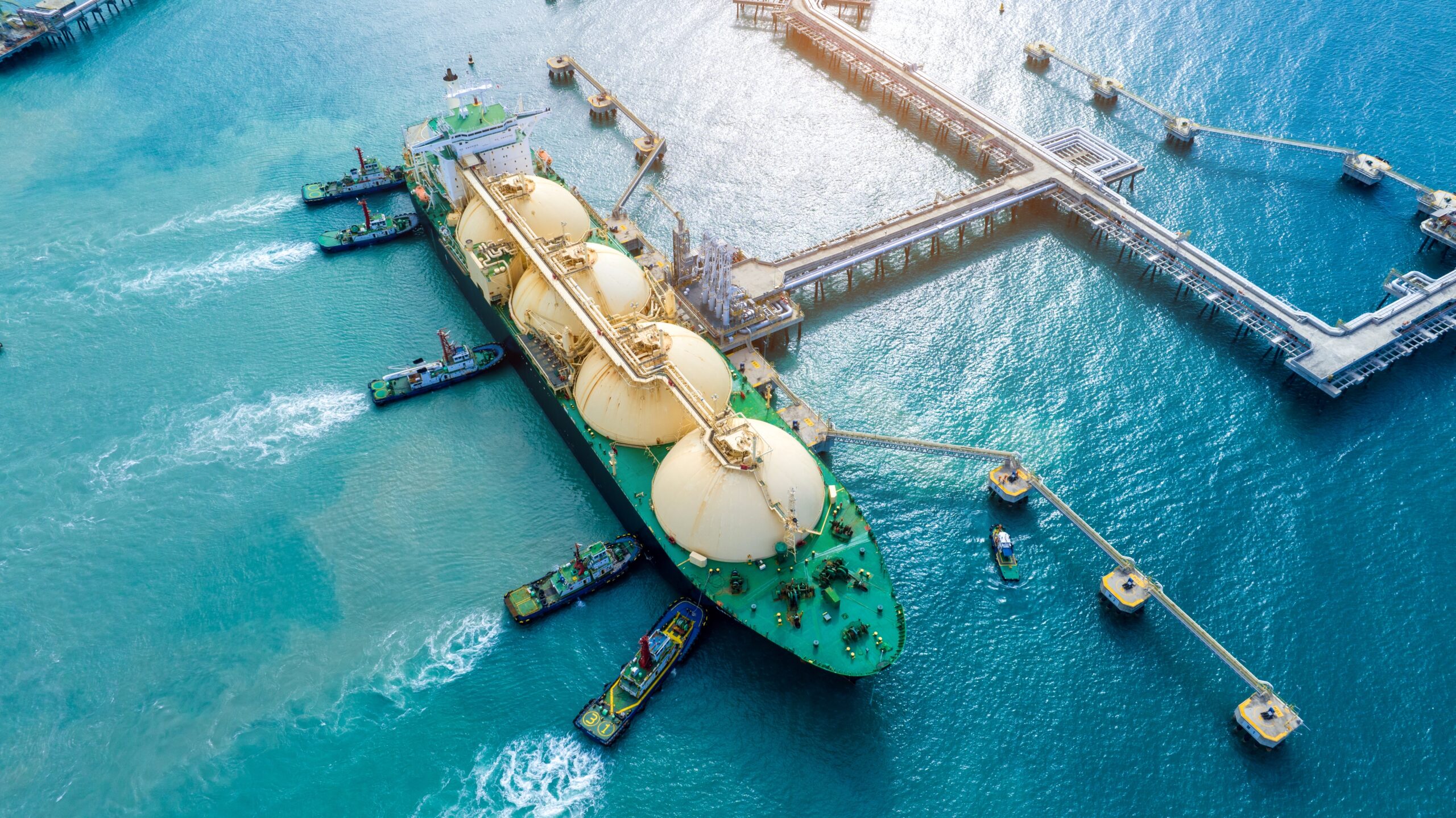
¿Qué es el gas natural licuado?
Desde cómo se fabrica hasta por qué es problemático: aquí tienes todo lo que necesitas saber sobre el GNL.
¿Qué es el GNL?
Gas natural licuado, El GNL (gas natural licuado) es gas natural que se ha enfriado a una temperatura extremadamente baja, alrededor de -162 °C (-260 °F), hasta transformarse en un líquido transparente e incoloro. En ese punto, el gas tiene un volumen 600 veces menor que el original, lo que facilita su almacenamiento y transporte a nivel mundial.
El principal atractivo del GNL La ventaja es que permite el transporte de gas natural a lugares a los que de otro modo no se podría llegar mediante gasoductos.
¿Cómo se produce el GNL?
La cadena de suministro de GNL tiene varios etapas:
- Extracción: El gas natural utilizado para el GNL se extrae principalmente mediante fracturación hidráulica, o "fracking". Este proceso consiste en bombear una mezcla a alta presión de agua, arena y productos químicos en la roca de esquisto subterránea para liberar el gas atrapado.
- Transporte: El gas extraído viaja luego a través de un gasoducto hasta una planta de licuefacción costera, donde se limpia y se somete a un proceso de superenfriamiento.
- Licuefacción: Los sistemas de refrigeración industrial enfrían el gas a temperaturas bajo cero, reduciendo así su volumen y convirtiéndolo en líquido. Este es un proceso que consume mucha energía.
- Envío: El gas licuado se carga en grandes buques cisterna de doble casco especialmente diseñados y se transporta por todo el mundo. El GNL también puede llegar a lugares más pequeños o remotos mediante "gasoductos virtuales" que utilizan ferrocarril, camiones o barcazas.
- Regasificación y distribución: Una vez que llega a su destino final, el GNL se calienta para volver a convertirlo en gas y se introduce en gasoductos para su distribución a hogares, empresas, centrales eléctricas y usuarios industriales.
¿Es el GNL más "limpio" que otros combustibles fósiles?
¿La respuesta corta? No.
Durante años, la industria de los combustibles fósiles ha promocionado el gas natural y el GNL como un “combustible de transición”, o una opción más limpia entre el carbón y las energías renovables. Sin embargo, si se considera el ciclo de vida completo del GNL, en realidad no es una solución climática.
El gas natural se compone principalmente de metano, un gas de efecto invernadero que es entre 80 y 86 veces peor para el planeta que el dióxido de carbono. Por lo tanto, aunque se descompone más rápido en la atmósfera que el dióxido de carbono, tiene impactos de calentamiento a corto plazo mucho mayores. Esto es importante porque fugas de metano Se producen en cada etapa de la cadena de suministro de GNL. Incluso los buques cisterna modernos y de bajo consumo de combustible emiten metano en sus gases de escape.
Un estudio de 2024 Un estudio realizado en la Universidad de Cornell refuta aún más la afirmación de que el GNL es una fuente de energía limpia. Tras examinar todo el ciclo de vida del GNL, descubrieron que la producción de GNL emite 331 TP3T más gases de efecto invernadero que el carbón en términos de su potencial de calentamiento global a 20 años. E incluso en un horizonte temporal de 100 años, descubrieron que Las emisiones de gases de efecto invernadero del GNL son iguales o superiores a las del carbón..
Estas emisiones no provienen únicamente del uso real de gas natural; esto explica solo 34% de sus emisiones. Aproximadamente la mitad de las emisiones totales provienen del diésel que queman las plataformas de perforación y de las fugas de metano durante la producción y el transporte.
¿Qué es el fracking?
Fracturación hidráulica es un método de extracción de gas que consiste en bombear una mezcla a alta presión de agua, arena y productos químicos en esquisto subterráneo para liberar el gas atrapado. Como puede imaginar, esto utiliza una enorme cantidad de agua, y cada pozo de fracturación hidráulica utiliza entre 1,5 millones y 16 millones de galones. Más de 80% de esta agua Las aguas residuales se vuelven radiactivas y no pueden reutilizarse. Los productos químicos utilizados en la fracturación hidráulica también representan un riesgo para las aguas locales, ya que pueden filtrarse y contaminar las fuentes de agua.
¿Es el GNL beneficioso para la economía?
Si bien el Departamento de Energía de Estados Unidos (DOE) afirma que el GNL proporciona beneficios económicos, sus propias investigaciones indican lo contrario. Un modelo del Departamento de Energía de 2024 Se estima que el aumento de las exportaciones nacionales de GNL elevaría los precios del gas natural y afectaría a los consumidores. El estudio también estima que, con base en los precios actuales, los costos del gas natural y la electricidad aumentarán hasta en 1.040.122 por hogar cada año. Además, a medida que aumenta la producción, se incrementa el riesgo de que un exceso de oferta perturbe aún más el mercado.
Si bien estas son proyecciones modeladas a largo plazo, los eventos pasados respaldan este escenario. Cuando comenzó el conflicto entre Rusia y Ucrania, las exportaciones estadounidenses de GNL a Europa aumentaron, creando una escasez en el mercado estadounidense.Esto provocó un aumento en los precios del gas natural, incrementando los costos del gas y la energía para los consumidores.
¿Es el GNL beneficioso para las personas?
No. La producción y el transporte de GNL emiten contaminantes atmosféricos en múltiples etapas..La fracturación hidráulica, principal método de extracción de gas natural licuado (GNL), se asocia con numerosos efectos adversos para la salud de las comunidades locales. En concreto, en zonas de alta extracción de gas natural, la exposición a los contaminantes derivados de la fracturación hidráulica se ha relacionado con un aumento de las tasas de asma, complicaciones en los partos y leucemia infantil. Además, genera contaminación acústica y lumínica, afectando a las personas y a la fauna silvestre.
Las plantas de GNL a menudo emiten monóxido de carbono, dióxido de azufre y compuestos orgánicos volátiles (COV).Los COV son gases que se emiten a la atmósfera, y si bien algunos son inofensivos, los que se producen en la producción de GNL no lo son. Exposición a los COV Las emisiones de las plantas de GNL pueden provocar dolores de cabeza, tos y otras enfermedades respiratorias. La exposición prolongada a este tipo de contaminación atmosférica también puede causar enfermedades cardíacas, cáncer y daños en el sistema reproductivo y los órganos internos.
Las comunidades de Luisiana, la costa del Golfo de Texas y el valle del río Ohio han sido históricamente marginadas y contaminadas por la industria tóxica. Los barrios predominantemente negros del "Corredor del Cáncer" de Luisiana, un corredor de 137 kilómetros a lo largo del río Misisipi que alberga más de 200 plantas industriales como refinerías de petróleo, plantas petroquímicas e instalaciones de GNL, tienen tasas de riesgo de cáncer entre las más altas del país (5%). Los residentes están enfermos y muriendo a causa del racismo institucionalizado y la desigualdad que perpetúan estas “zonas de sacrificio”.”
¿Es el GNL bueno para el planeta?
No. Las plantas de GNL producen cantidades significativas de contaminación atmosférica., y todo el ciclo de vida produce gases de efecto invernadero que tienen impactos climáticos negativos. Los procesos asociados con la producción de GNL y gas natural también son intensivos en agua, y esto puede agotar los recursos hídricos locales y potencialmente contaminar los cursos de agua.La construcción, el transporte y la gestión de los residuos relacionados con la producción de GNL. Contribuyen en gran medida a la pérdida y degradación del hábitat. que perjudica a las plantas y a los animales. La contaminación acústica y lumínica Los productos generados en la extracción de GNL también perjudican a la fauna silvestre.
¿Dónde se está produciendo GNL?
En los EE. UU., la mayoría de instalaciones de GNL Se concentran a lo largo de la costa del Golfo en Texas y Luisiana. Es también allí donde se planea construir la mayoría de las nuevas instalaciones. Además, existen plantas en la costa este y la costa oeste, incluyendo Alaska.
¿Existen alternativas al GNL?
¡Sí! Las fuentes de energía limpias y renovables, como la eólica y la solar, son soluciones viables y en rápido crecimiento. Debemos rechazar el desarrollo de nuevas plantas de GNL e invertir en medidas para mitigar el daño causado por los proyectos existentes. Si bien la transición hacia fuentes de energía distintas a los combustibles fósiles es un cambio importante, cuanto antes lo hagamos, mejor será el futuro a largo plazo para nuestro planeta y nuestras comunidades.
¿Qué está haciendo Amigos de la Tierra para abordar el problema?
La reciente y rápida expansión de las exportaciones de gas natural licuado (GNL) y su infraestructura constituye un desastre climático que, de no controlarse, seguirá perjudicando de manera desproporcionada a las comunidades locales y al medio ambiente.
Amigos de la Tierra trabaja no solo para garantizar que las agencias federales estadounidenses realicen un análisis exhaustivo del clima y del interés público al considerar nuevos proyectos de GNL, sino también para que los defensores de los combustibles fósiles en el poder político rindan cuentas por su historial de no priorizar el clima, los intereses de los consumidores y la justicia ambiental en cada etapa del proceso de GNL. Además, Amigos de la Tierra lucha contra la financiación de proyectos de GNL por parte de agencias gubernamentales estadounidenses, tanto a nivel nacional como internacional.
Publicaciones relacionadas
Formas de apoyar nuestro trabajo

Lea las últimas noticias
Manténgase informado e inspirado. Lea nuestros últimos comunicados de prensa para descubrir cómo estamos contribuyendo al planeta.

Vea nuestro impacto
Vea las verdaderas victorias que su apoyo hizo posibles. Lea sobre los triunfos de campaña por los que hemos luchado y ganado juntos.

Dona hoy
Contribuye a impulsar el cambio. Se necesita el apoyo de defensores del medio ambiente como tú para construir un mundo más sano y justo.