

What is Liquefied Natural Gas?
From how it’s made to why it’s problematic – here’s everything you need to know about LNG
What is LNG?
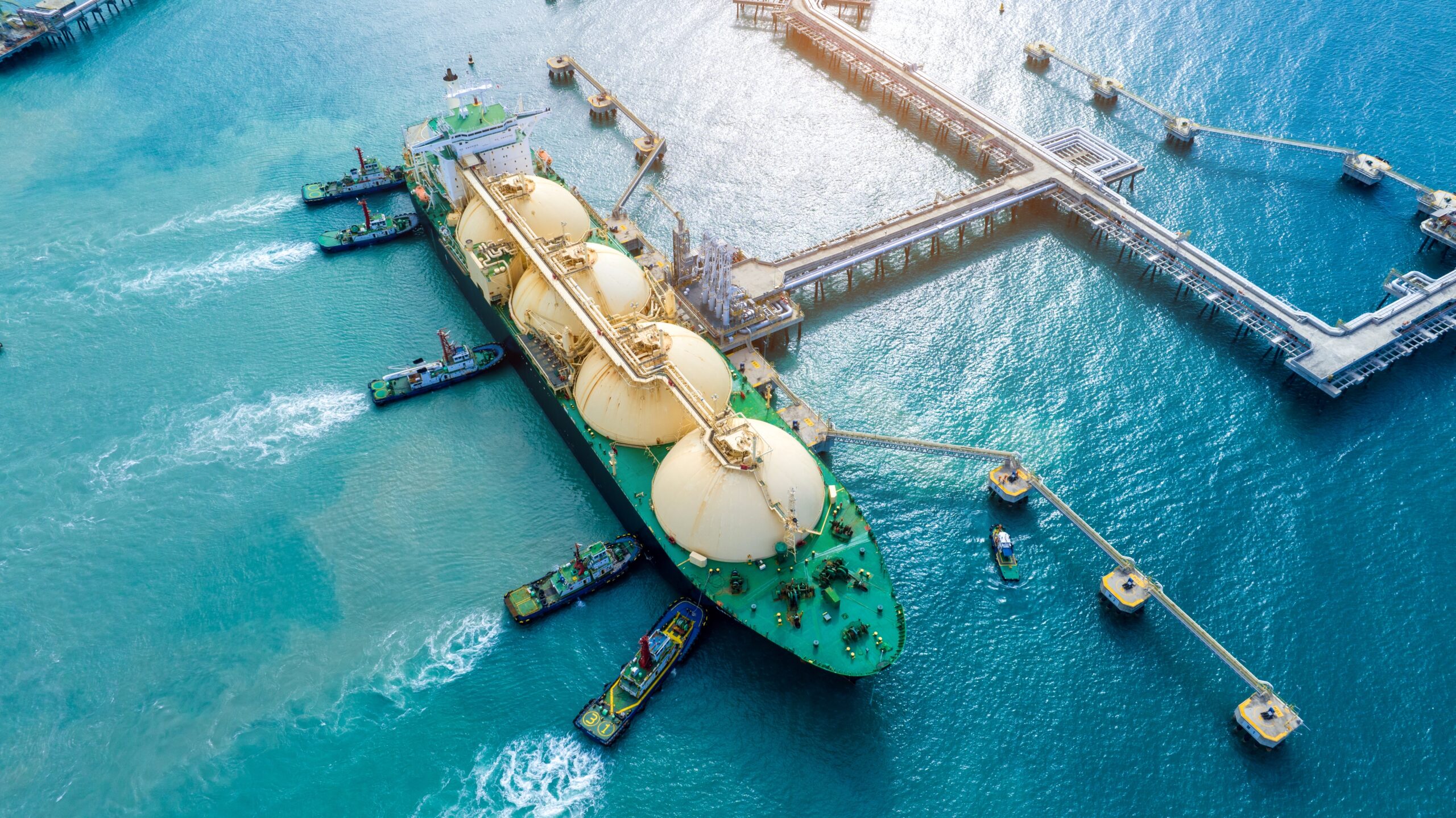
Liquefied Natural Gas, or LNG, is natural gas that has been cooled to an extremely low temperature – around –260 degrees F (-162 degrees C) – until it transforms into a clear, colorless liquid. At that point, the gas is 600x smaller than its original volume, making it easy to store and ship worldwide.
The main appeal of LNG is that it enables the transport of natural gas to places that could not otherwise be reached by pipelines.
How is LNG Made?
The LNG supply chain has several stages:
- Extraction: The natural gas used for LNG is primarily extracted through hydraulic fracturing, or “fracking.” This is a process where a high-pressure mixture of water, sand, and chemicals is pumped into underground shale rock to release trapped gas.
- Transportation: The extracted gas then travels through a pipeline to a coastal liquefication facility, where it is cleaned and supercooled.
- Liquefaction: Industrial refrigeration systems chill the gas to subzero temperatures, thereby reducing its volume and converting it to a liquid. This is a highly energy-intensive process.
- Shipping: The liquid gas is then loaded onto large, specially designed double-hulled tankers and transported worldwide. LNG can also reach smaller or remote places through “virtual pipelines” using rail, trucks, or barges.
- Regasification and distribution: Upon reaching its final destination, LNG is warmed back into a gas and fed into pipelines for delivery to homes, businesses, power plants, and industrial users.
Is LNG “Cleaner” Than Other Fossil Fuels?
The short answer? No.
For years, the fossil fuel industry has marketed natural gas and LNG as a “bridge fuel”, or a cleaner option between coal and renewable energy. However, when the full life cycle of LNG is considered, it’s not actually a climate solution.
Natural gas is primarily composed of methane, a greenhouse gas that is between 80 and 86 times worse for the planet than carbon dioxide. So even though it does break down faster in the atmosphere than carbon dioxide, it has much higher short-term warming impacts. This is important because methane leaks occur at every stage of the LNG supply chain. Even modern, fuel-efficient tankers release methane in their exhaust.
A 2024 study conducted at Cornell University further disproves the claim that LNG is a clean energy source. After examining the entire LNG lifecycle, they found that LNG production emits 33% more greenhouse gas than coal in terms of its 20-year global warming potential. And even over a 100-year time horizon, they found that LNG either equals or exceeds coal’s greenhouse gas emissions.
These emissions are not solely from actually using natural gas – this accounts for only 34% of its emissions. Around half of the total emissions come from diesel burned by drilling rigs and from methane leaking during production and transport.
What is Fracking?
Fracking is a method of gas extraction that involves pumping a high-pressure mixture of water, sand, and chemicals into underground shale to release trapped gas. As you can imagine, this uses a huge amount of water, with each fracking well using between 1.5 million and 16 million gallons. Over 80% of this water becomes radioactive wastewater and cannot be reused. The chemicals used in fracking also pose risks to local waters, as they can run off and pollute water sources.
Is LNG Good For the Economy?
While the U.S. Department of Energy (DOE) claims LNG provides economic benefits, its own research indicates otherwise. A 2024 DOE model estimates that increasing domestic LNG exports would raise natural gas prices and affect consumers. The study also estimates that, based on current prices, natural gas and electricity costs will increase by up to $122 per household each year. And as production increases, the risk of oversupply further disrupting the market rises.
While these are modeled long-term projections, past events support this scenario. As the Russia-Ukraine conflict began, U.S. LNG exports to Europe rose, creating a shortage in the U.S. market. This led to higher natural gas prices, increasing gas and energy costs for consumers.
Is LNG Good For People?
No. LNG production and transport emit air pollutants at multiple stages. Fracking, the primary method of LNG extraction, is associated with numerous adverse health outcomes for local communities. Specifically, in areas of high natural gas extraction, exposure to pollutants from fracking has been linked to increased asthma rates, adverse birth outcomes, and childhood leukemia. It also creates both noise and light pollution, impacting people and wildlife.
LNG plants often emit carbon monoxide, sulfur dioxide, and volatile organic compounds (VOCs). VOC’s are gases that are emitted into the air, and while some are harmless, those produced in LNG production are not. Exposure to the VOC’s from LNG plants can lead to headaches, coughing, and other respiratory illnesses. Long-term exposure to this type of air pollution can also lead to heart disease, cancer, and damage to the reproductive system and internal organs.
Communities in Louisiana, the Texas Gulf Coast, and the Ohio River Valley have been historically marginalized and polluted by toxic industry. The predominantly Black neighborhoods in Louisiana’s “Cancer Alley” – an 85-mile-long corridor along the Mississippi River housing over 200 industrial plants such as oil refineries, petrochemical plants, and LNG facilities – have cancer risk rates in the highest 5% nationally. Residents are sickened and dying from the institutionalized racism and inequity that perpetuates these “sacrifice zones.”
Is LNG Good For the Planet?
No. LNG plants produce significant amounts of air pollution, and the entire lifecycle produces greenhouse gases that have negative climate impacts. The processes associated with LNG and natural gas production are also water-intensive, and this can deplete local water resources and potentially pollute waterways. The construction, transportation, and management of waste related to LNG production contribute heavily to habitat loss and degradation that harms plants and animals. The noise and light pollution produced in LNG extraction also harm wildlife.
Where is LNG Production Happening?
In the U.S., the majority of LNG facilities are concentrated along the Gulf Coast in Texas and Louisiana. This is also where the majority of new facilities are planned to be built. There are also plants on the East Coast and West Coast, including Alaska.
Are There Alternatives to LNG?
Yes! Clean, renewable energy sources, such as wind and solar power, are viable and rapidly growing solutions. We need to reject the development of new LNG plants and invest in measures to mitigate the harm caused by existing projects. While transitioning away from fossil fuels is a big change, the sooner we make it, the better the long-term outlook for our planet and communities.
What is Friends of the Earth doing to Address the Problem?
The recent and rapid expansion of Liquified Natural Gas (LNG) exports and its infrastructure is a climate disaster that if left unchecked will continue to disproportionately harm local communities and the environment.
Friends of the Earth works not only to ensure that there is a robust climate and public interest analysis put in place by U.S. federal agencies for the consideration of new LNG projects, but also that fossil fuel champions in political power are held accountable for their continued record not centering the climate, consumer interest, and environmental justice into every step of the LNG process. In addition, Friends of the Earth fights finance from U.S. government agencies for LNG projects domestically and all over the world.
Related Posts
Ways to Support Our Work

Read Latest News
Stay informed and inspired. Read our latest press releases to see how we’re making a difference for the planet.

See Our Impact
See the real wins your support made possible. Read about the campaign wins we’ve fought for and won together.

Donate Today
Help power change. It takes support from environmental champions like you to build a more healthy and just world.