


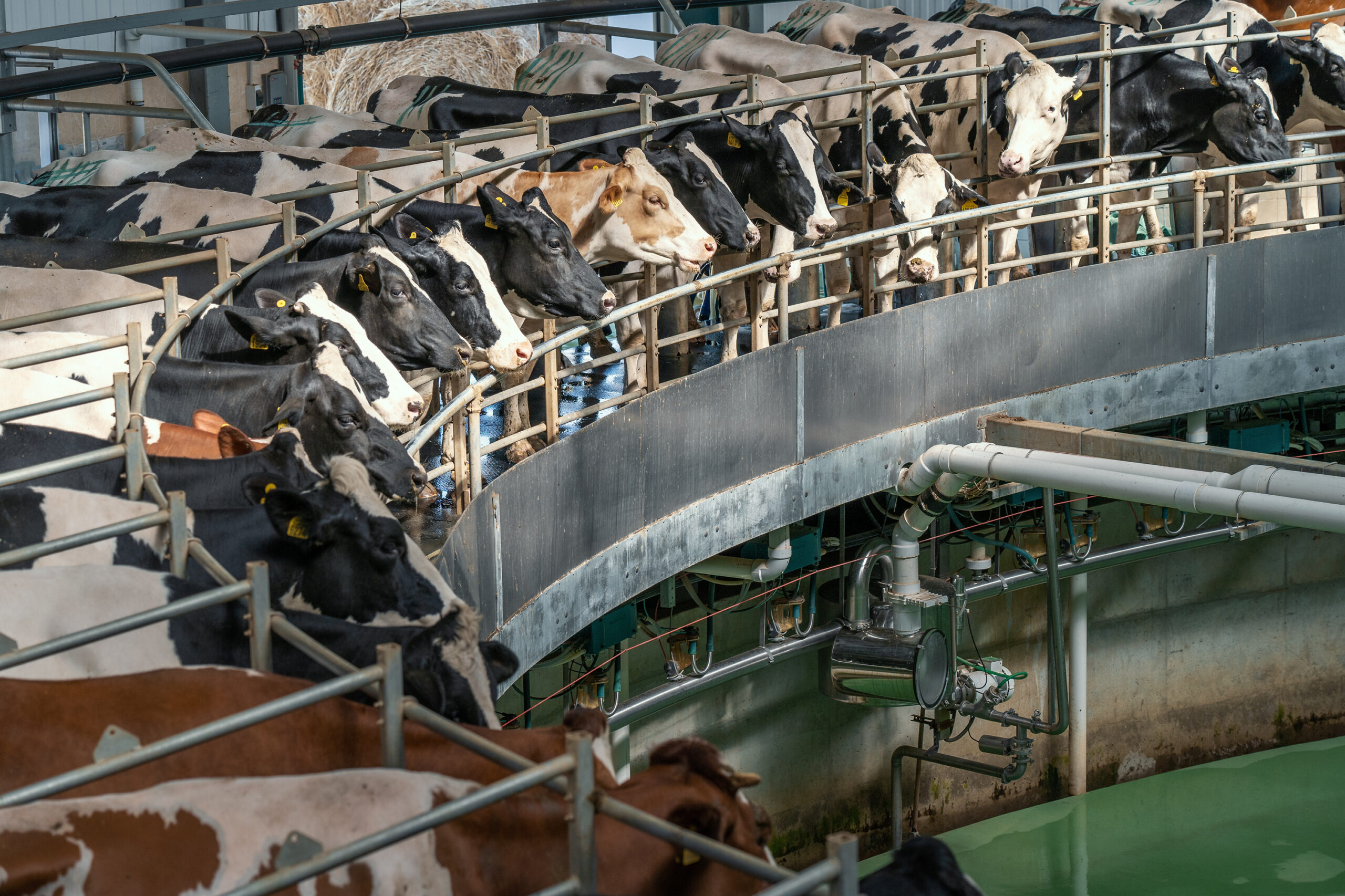
¿Por qué la ganadería industrial es perjudicial para el medio ambiente?
La ganadería industrial se ha convertido en uno de los principales impulsores del cambio climático, la deforestación, la pérdida de biodiversidad y la contaminación a nivel mundial. Si bien la producción de alimentos es esencial, el sistema ganadero industrial actual requiere enormes cantidades de tierra, agua, energía y piensos para producir carne, lácteos y huevos. Estas prácticas contribuyen a las emisiones de gases de efecto invernadero, degradan los ecosistemas, contaminan los cursos de agua y representan una amenaza para la salud pública.
Friends of the Earth trabaja para transformar nuestro sistema alimentario luchando contra la ganadería industrial, apoyando la agricultura sostenible y promoviendo políticas que protegen a las personas, los animales y el planeta.
¿Cómo afecta la ganadería industrial al medio ambiente?
Los impactos ambientales de la ganadería industrial se extienden mucho más allá de la granja. Cada etapa de la producción, desde el cultivo de forraje hasta la cría de ganado, el transporte de animales, el procesamiento de la carne y la gestión estiércol — genera contaminación y consume recursos naturales.
Los mayores impactos ambientales incluyen:
- Gas de efecto invernadero que provoca el cambio climático emisiones
- Deforestación y destrucción del hábitat de la vida silvestre
- Uso excesivo del suelo
- Consumo de agua y agotamiento de las aguas dulces
- Contaminación del agua por estiércol y escorrentía de fertilizantes
- contaminación atmosférica
- degradación del suelo
- Zonas muertas en el océano causadas por la contaminación de nutrientes.
En conjunto, estos impactos convierten a la ganadería industrial en uno de los mayores contribuyentes a la degradación ambiental a nivel mundial.
1. La ganadería acelera el cambio climático.
La ganadería genera gases de efecto invernadero a lo largo de toda la cadena de suministro de alimentos.
Estas emisiones provienen de diversas fuentes:
- Metano liberado por el ganado vacuno y otros animales rumiantes durante digestión
- Metano y óxido nitroso de almacenamiento de estiércol
- Dióxido de carbono procedente de la producción, el procesamiento, la refrigeración y el transporte de carne.
- Fertilizante utilizado para cultivar forraje como el maíz y la soja.
El metano merece especial atención porque, si bien retiene mucho más calor que el dióxido de carbono a corto plazo, su permanencia en la atmósfera es relativamente breve. Reducir las emisiones de metano es una de las maneras más rápidas de frenar el calentamiento global.
La producción ganadera industrial también depende en gran medida de los combustibles fósiles para la producción de fertilizantes, maquinaria agrícola, transporte de piensos, refrigeración y procesamiento de carne.
2. La ganadería impulsa la deforestación.
En todo el mundo, Se talan los bosques para crear espacio para el pastoreo del ganado y para cultivar forraje para el ganado.
Cuando los bosques desaparezcan:
- La fauna silvestre pierde hábitats cruciales.
- El carbono almacenado en los árboles se libera a la atmósfera.
- Los patrones de lluvia cambian.
- Los ecosistemas se vuelven menos resistentes al cambio climático.
La protección de los bosques es una de las soluciones climáticas más eficaces, por lo que la expansión de la producción ganadera industrial resulta especialmente preocupante.
3. La producción ganadera utiliza grandes extensiones de tierra.
La ganadería es una de las más intensivo en tierra formas de producción de alimentos.
Grandes extensiones de tierras de cultivo se utilizan no para cultivar alimentos directamente para el consumo humano, sino para producir forraje para el ganado.
Esto genera varios desafíos ambientales:
- Expansión hacia bosques y praderas
- erosión del suelo
- Destrucción del hábitat
- Almacenamiento reducido de carbono
- Mayor demanda de fertilizantes y pesticidas
La producción de alimentos vegetales generalmente requiere mucha menos tierra que la producción de carne y productos lácteos.
4. La ganadería contamina el agua.
Las operaciones ganaderas industriales generan enormes cantidades de estiércol.
Cuando el estiércol no se gestiona adecuadamente, nutrientes como el nitrógeno y el fósforo pueden llegar a los cursos de agua cercanos.
Esta contaminación contribuye a:
- Proliferación de algas nocivas
- Muerte de peces
- Agua potable contaminada
- Zonas muertas en lagos y aguas costeras
- Aumento de los costes del tratamiento del agua
La producción de cultivos forrajeros también contribuye a la escorrentía de fertilizantes, lo que agrava la contaminación del agua.
5. Las granjas industriales contaminan el aire.
Mucha gente no se da cuenta de que la ganadería industrial es también una importante fuente de contaminación atmosférica.
Comunicado de prensa de grandes explotaciones ganaderas:
- Amoníaco
- Metano
- sulfuro de hidrógeno
- Polvo y partículas
- Compuestos que provocan olores
Estos contaminantes pueden afectar a las zonas cercanas. comunidades, trabajadores agrícolas y residentes rurales, al tiempo que contribuyen al cambio climático.
6. La ganadería consume grandes cantidades de agua dulce.
La producción de carne y productos lácteos requiere agua a lo largo de todo el proceso de producción.
El agua es necesaria para:
- Cultivar forraje o regar los pastos
- Agua potable para el ganado
- Instalaciones de limpieza
- Procesamiento de carne
A medida que las sequías se vuelven más frecuentes, mejorar la eficiencia del agua en nuestro sistema alimentario cobra cada vez más importancia.
¿Por qué la ganadería industrial es especialmente perjudicial?
Las granjas industriales, también conocidas como explotaciones ganaderas intensivas (CAFO, por sus siglas en inglés), intensifican muchos de los impactos ambientales de la ganadería al concentrar miles, o incluso millones, de animales en un solo lugar.
En comparación con las granjas diversificadas basadas en pastos, las granjas industriales suelen producir:
- Más grande lagunas de estiércol
- Mayor que emisiones de metano
- Mayor contaminación por amoníaco
- Aumento de la contaminación del agua
- Más quejas por olores
- Mayor preocupación por la salud pública en las comunidades cercanas.
Friends of the Earth aboga por políticas que se alejen de la ganadería industrial y, al mismo tiempo, apoyen a los agricultores en su transición hacia prácticas agrícolas más sostenibles.
Soluciones: Construyendo un mejor sistema alimentario
Reducir el impacto ambiental de la ganadería requiere cambios en todo nuestro sistema alimentario.
Amigos de la Tierra apoya soluciones que incluyen:
- Reducción de la contaminación procedente de las granjas industriales
- Apoyar a los agricultores y ganaderos que utilizan prácticas orgánicas y regenerativas.
- Proteger los bosques y los ecosistemas naturales.
- Reducir los incentivos para biogás de estiércol
- Eliminar los subsidios a las granjas industriales.
- Eliminar gradualmente la ganadería industrial y apoyar a los agricultores en la transición hacia prácticas más sostenibles.
- Reducción del desperdicio de alimentos
- Ampliar el acceso a alimentos saludables y con predominio de plantas
- Exigir responsabilidades a los contaminadores industriales
En conjunto, estas soluciones pueden reducir las emisiones de gases de efecto invernadero, proteger la biodiversidad, mejorar la calidad del agua y construir un sistema alimentario más resiliente.
Publicaciones relacionadas
Formas de apoyar nuestro trabajo

Lea las últimas noticias
Manténgase informado e inspirado. Lea nuestros últimos comunicados de prensa para descubrir cómo estamos contribuyendo al planeta.

Vea nuestro impacto
Vea las verdaderas victorias que su apoyo hizo posibles. Lea sobre los triunfos de campaña por los que hemos luchado y ganado juntos.

Dona hoy
Contribuye a impulsar el cambio. Se necesita el apoyo de defensores del medio ambiente como tú para construir un mundo más sano y justo.