


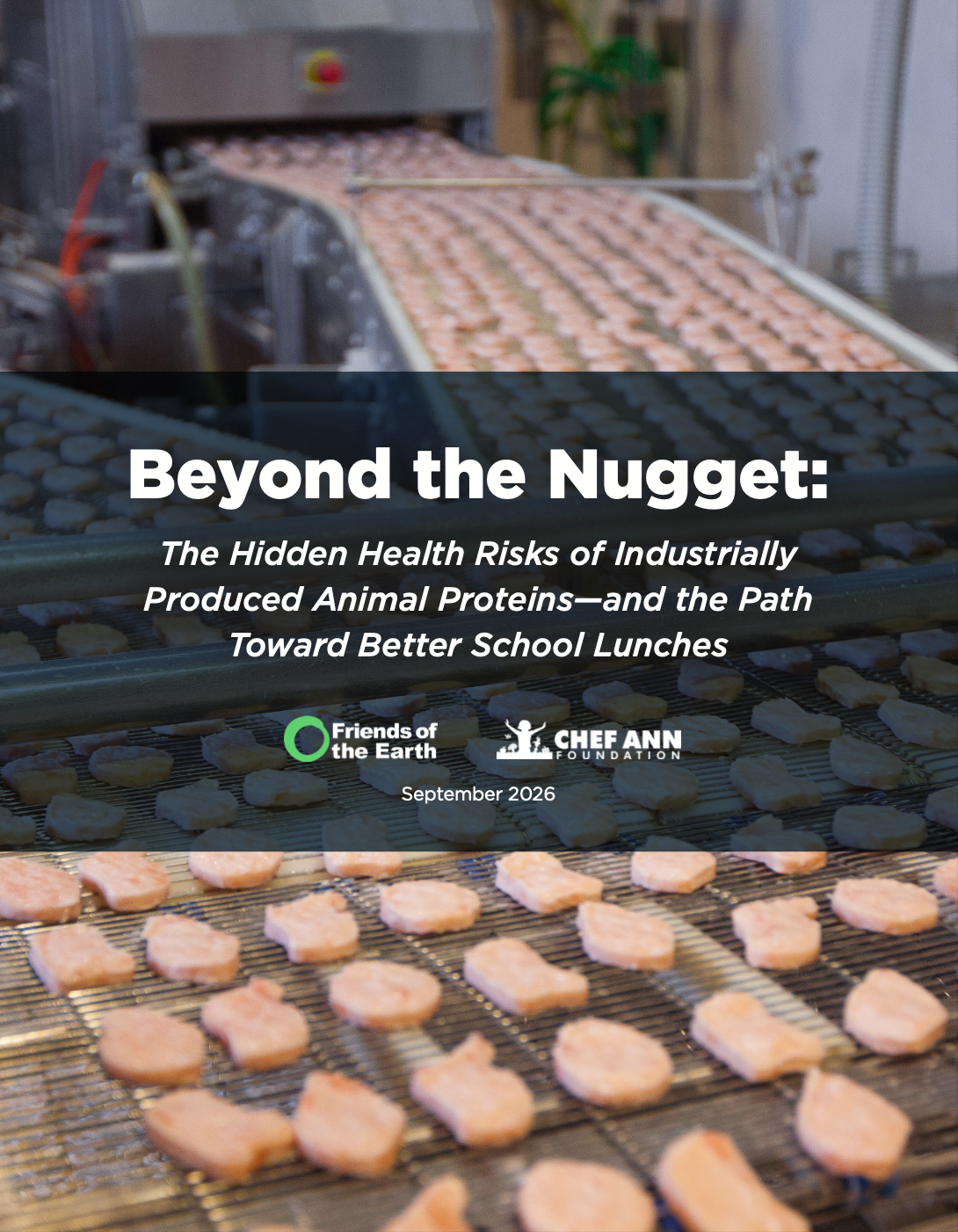
Más allá de la pepita
Lee el resumen ejecutivo: Los principales hallazgos y recomendaciones de un vistazo.
Lee el informe completoNuestro análisis de los menús de los almuerzos escolares, los riesgos para la salud y las políticas que determinan lo que se sirve en las escuelas.
Explora el Investigación complementaria y apéndicesMétodos detallados, perfiles de productos y evidencia que los respalda.
Lee el presione soltarPrincipales conclusiones y perspectivas de expertos en salud y alimentación escolar.
Lee el recurso complementario: Perfiles de distritos escolares de todo el país que lideran el camino hacia proteínas más saludables en los almuerzos escolares.
Vea el seminario web: Escuche a los autores del informe, a un estudiante y a un director de servicios de alimentación sobre las principales conclusiones y cómo mejorar los almuerzos escolares.
Tomar medidas hoy: Dígale al USDA que les dé a nuestros hijos mejor comida escolar.
Las comidas escolares son una de las inversiones más importantes de nuestra nación en salud pública. Casi 30 millones de niños comen en la escuela todos los días y, para muchos de ellos, son las comidas más saludables y confiables que reciben. En los últimos quince años, estándares nutricionales más estrictos han mejorado significativamente la calidad de las comidas escolares al aumentar el consumo de cereales integrales, frutas y verduras, y reducir el sodio. Sin embargo, la mayoría de los platos principales del almuerzo escolar siguen estando dominados por alimentos altamente procesados, con alto contenido de carne y queso, como pizza, hamburguesas, nuggets de pollo y sándwiches de fiambre. Estos alimentos, que generalmente provienen de grandes cadenas de suministro industriales, probablemente contienen una cantidad significativa —y en gran medida no declarada— de contaminantes. Estos incluyen:
- residuos de hormonas, antibióticos y pesticidas;
- dioxinas, PFAS y metales pesados; y
- Ingredientes preocupantes como los nitratos y el fosfato de sodio.
Dada la evidencia sobre los riesgos para la salud asociados con las dietas ricas en carne y queso procesados y producidos industrialmente —entre ellos, un mayor riesgo de sobrepeso, ciertos tipos de cáncer y enfermedades cardíacas—, es más importante que nunca seguir mejorando la calidad de las comidas escolares para proteger y promover la salud de los niños de nuestra nación.
Para comprender mejor qué se sirve en los comedores escolares de todo el país —y las implicaciones para la salud que esto conlleva—, analizamos los menús de almuerzo escolar de una muestra de 45 distritos escolares públicos de primaria y secundaria, que representan más de 10 000 platos principales identificables. Identificamos los platos principales que se sirven con mayor frecuencia, caracterizamos la diversidad de las opciones proteicas y cuantificamos la prevalencia de la carne roja, la carne procesada, los platos principales de origen vegetal y los platos principales a base de carne y queso.
Para evaluar los ingredientes etiquetados que suscitan preocupación, los contaminantes no declarados y el riesgo de enfermedades crónicas en los platos principales que se sirven con mayor frecuencia en los almuerzos escolares, identificamos productos representativos de diez de las categorías de platos principales que se ofrecen con mayor frecuencia, procedentes de empresas que participan en el Programa Nacional de Acuerdos de Procesamiento del USDA, ya que los menús de comida escolar disponibles públicamente no enumeran los ingredientes ni los productos específicos utilizados para preparar las comidas.
Para cada uno de estos diez productos, evaluamos los posibles riesgos para la salud basándonos en los ingredientes indicados en la etiqueta, la información nutricional del producto, los problemas de seguridad alimentaria documentados por el proveedor del producto y una revisión de la literatura científica, así como las pruebas e informes federales y de terceros relacionados con contaminantes no revelados.
Hallazgos clave
La carne y el queso predominan en los menús de los almuerzos escolares. La gran mayoría (88%) de todos los platos principales ofrecidos contenían productos de origen animal como principal fuente de proteínas. Más de la mitad de todos los platos principales (53%) contenían lácteos, y casi la mitad de todos los platos principales (47%) contenían queso.
Excluyendo los sándwiches de mantequilla de frutos secos y mermelada, que suelen ofrecerse como comida para llevar en lugar de como plato principal, solo el 51% de los platos principales eran completamente de origen vegetal, lo que subraya la falta de diversidad proteica en las comidas escolares.
Las carnes rojas y procesadas son omnipresentes en las comidas escolares. Los productos de pollo empanizados (por ejemplo, nuggets y hamburguesas de pollo) fueron la categoría de plato principal más servida, presente en más de la mitad de los días escolares. En total, 39% de platos principales contenían carne roja o procesada. Al menos 28% de platos principales contenían carne procesada, y 27% de platos principales contenían carne roja, la cual la Agencia Internacional para la Investigación del Cáncer (IARC) ha clasificado como carcinógeno conocido y probable carcinógeno para los humanos, respectivamente.
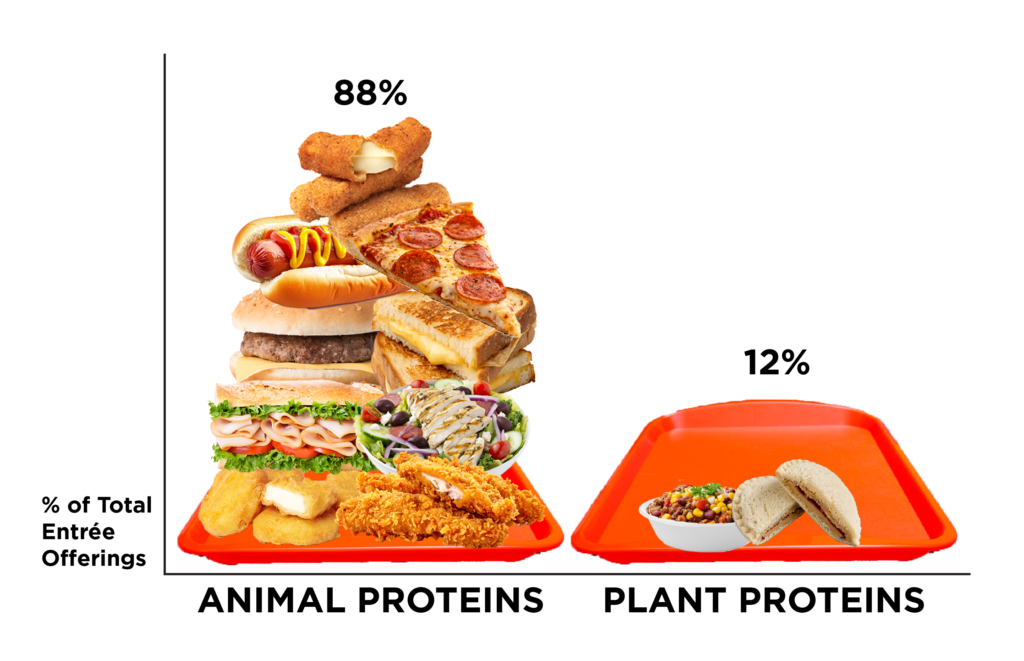
De los diez productos representativos que analizamos para diez de las categorías de platos principales más ofrecidas:
- Siete contienen carne procesada, un carcinógeno conocido.
- Siete Contienen fosfatos de sodio o potasio, aditivos que se sabe que perjudican la función renal.
- Siete Contienen más de 400 mg de sodio, lo que representa más de una cuarta parte del límite diario "ideal" de la Asociación Estadounidense del Corazón para los niños.
- Siete Contienen azúcares añadidos, dos de los cuales contienen más de una cuarta parte del límite diario recomendado por la Asociación Americana del Corazón de 25 g para niños.
- Seis son de proveedores que hemos identificado como objeto de importantes retiradas de alimentos por parte del USDA en los últimos cinco años, incluida la contaminación por materia extraña, Listeria, y Salmonela
- Cuatro Contienen nitrato o nitrito de sodio, que son probables carcinógenos que se utilizan comúnmente en carnes procesadas.
- Tres contienen carne roja, un probable carcinógeno.
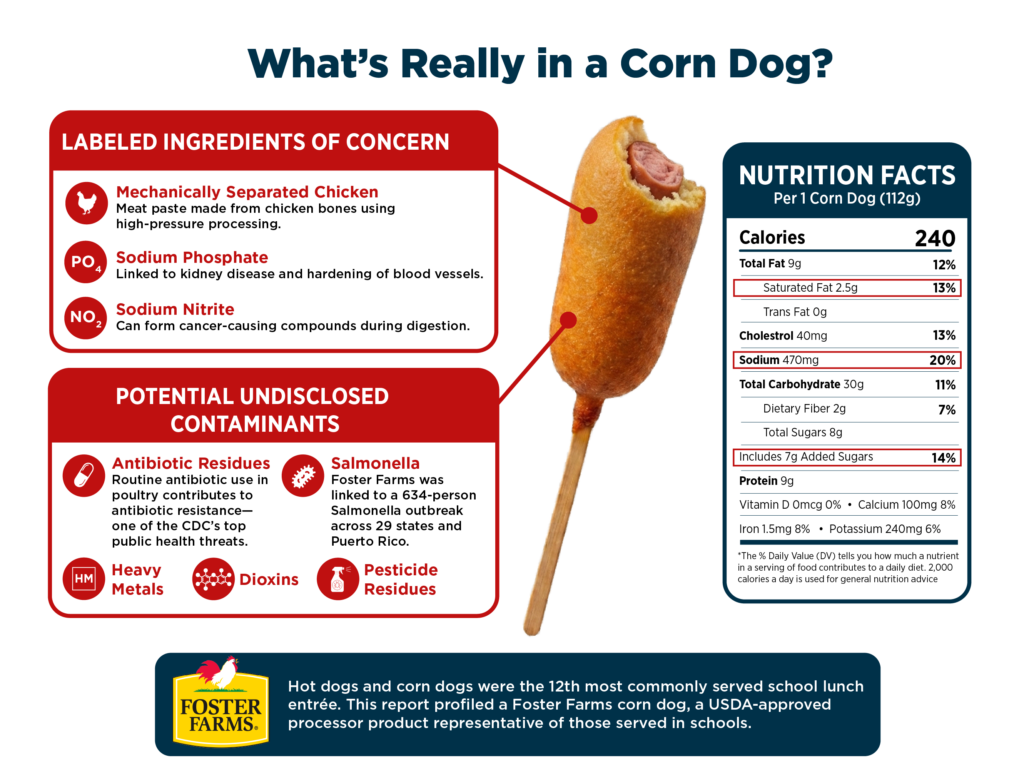
Los platos principales que se ofrecen con mayor frecuencia en los comedores escolares probablemente exponen a los niños a múltiples riesgos para la salud. Casi todos los productos representativos evaluados en este informe contenían ingredientes preocupantes, en particular fosfatos de sodio y nitritos de sodio, así como altos niveles de sodio, azúcares añadidos y grasas saturadas. Toda la carne presente en los productos representativos era procesada, lo que supone un riesgo de cáncer. Además, se sabe que las dietas ricas en carne roja y procesada y bajas en proteínas vegetales ricas en fibra aumentan el riesgo de padecer diversas enfermedades crónicas, como enfermedades cardiovasculares y diabetes tipo 2. Asimismo, dado que estos productos casi con toda seguridad provienen de cadenas de suministro de ganadería industrial, es probable que también contribuyan a la exposición dietética de los niños a contaminantes no declarados asociados a la ganadería industrial, como residuos de medicamentos veterinarios, pesticidas, dioxinas, PFAS y metales pesados, así como patógenos microbianos.
Estos contaminantes se han relacionado con graves problemas de salud, como la resistencia a los antimicrobianos, el cáncer, la alteración endocrina, el daño al neurodesarrollo, la disfunción inmunitaria y las enfermedades transmitidas por los alimentos. Si bien el USDA monitorea de forma rutinaria la carne y las aves de corral para detectar riesgos microbianos y ciertos residuos químicos, sus pruebas solo abarcan una pequeña fracción del suministro de carne en Estados Unidos. Los productos adquiridos para el Programa Nacional de Almuerzos Escolares se analizan de forma rutinaria para detectar patógenos microbianos, pero no se someten a un análisis exhaustivo para detectar la amplia gama de contaminantes ambientales que se describen en este informe.
Las pruebas gubernamentales e independientes siguen detectando medicamentos veterinarios, pesticidas, PFAS, metales pesados y otros contaminantes en la carne, los productos lácteos y los alimentos escolares. Si bien la mayoría de los residuos detectados se encuentran por debajo de los límites reglamentarios actuales de EE. UU., siguen produciéndose infracciones. Los estudios independientes suelen constatar que los contaminantes están más extendidos de lo que sugiere la vigilancia federal, y las normas de seguridad actuales no tienen en cuenta adecuadamente la exposición acumulativa o sinérgica a múltiples sustancias químicas a lo largo de la vida. Además, las normas estadounidenses suelen ser menos protectoras que las de la Unión Europea, especialmente para los niños, cuyos organismos en desarrollo son más vulnerables a la exposición a sustancias químicas.
Estos hallazgos subrayan la necesidad de realizar pruebas químicas más rigurosas, aumentar la transparencia y mejorar las políticas de adquisición para reducir la exposición de los niños a contaminantes nocivos en las comidas escolares. Estas exposiciones y los riesgos para la salud asociados no son exclusivos de las comidas escolares; reflejan patrones más amplios en el sistema alimentario. Sin embargo, dado que las comidas escolares constituyen la principal fuente de alimentos financiados con fondos públicos para niños en el país y una fuente de alimento casi diaria para decenas de millones de niños, la reforma de las comidas escolares ofrece una herramienta excepcionalmente poderosa para mejorar la alimentación infantil, reducir la exposición dietética acumulativa de los niños a contaminantes y orientar la cadena de suministro animal en general hacia una dirección más saludable.
Un problema de sistemas requiere soluciones de sistemas.
La omnipresencia de carne y queso procesados y producidos industrialmente en los menús escolares no es un fracaso de los distritos escolares individuales: es el resultado previsible de una financiación federal insuficiente, políticas de adquisición obsoletas, fallas regulatorias y un sistema alimentario más amplio que incentiva los alimentos procesados y baratos producidos a través de cadenas de suministro industriales. Los programas de comidas escolares operan con márgenes extremadamente ajustados (alrededor de 104.70 dólares por almuerzo gratuito), que dos tercios de los directores de nutrición escolar en todo el país consideran insuficientes para cubrir sus costos. Además de este reembolso federal por comida, las escuelas reciben una asignación del USDA para productos básicos que proporciona entre 15 y 201.300 dólares de los alimentos en las bandejas de los niños. Aproximadamente 401.300 dólares de esta asignación se destinan a empresas aprobadas por el USDA para procesar aún más ingredientes como pollo, carne de res y queso en los nuggets, hamburguesas y pizzas que son tan comunes en los menús de almuerzo escolar. En efecto, los fondos federales destinados a productos básicos, que supuestamente apoyan a los productores agrícolas, terminan subvencionando los platos principales altamente procesados que se sirven en las escuelas y que se analizan en este informe.
Los hallazgos de este informe no constituyen una crítica a los profesionales de la nutrición escolar, muchos de los cuales están liderando innovaciones notables a pesar de importantes limitaciones. En cambio, exponen la necesidad de inversiones sistémicas y específicas, así como de una transformación de las políticas, para que los distritos escolares reduzcan su dependencia de las proteínas animales altamente procesadas. En todo el país, los distritos ya están implementando estrategias efectivas, como la expansión de la cocina casera, el aumento de la oferta de alimentos de origen vegetal y el abastecimiento de alimentos de mayor calidad y alineados con los valores (por ejemplo, alimentos orgánicos y productos animales de origen local y criados en pastos). Sus éxitos demuestran que las comidas escolares más saludables son factibles y populares cuando se dispone de los recursos y la capacitación adecuados. Un recurso complementario a este informe, Construyendo una bandeja mejor, pone de relieve estos logros e ilustra los cambios que ya están en marcha en diversos entornos escolares de todo el país.
Entre ellas se encuentran tres estrategias clave que abordan directamente los problemas de salud identificados en este informe:
- Cocina casera con alimentos integrales., lo que puede reducir la dependencia de productos procesados que contienen ingredientes preocupantes y permitir el uso de ingredientes más frescos y mínimamente procesados.
- Ampliando las opciones de origen vegetal, lo que ayuda a diversificar la oferta de proteínas, al tiempo que reduce la dependencia de las carnes procesadas cancerígenas, disminuye la exposición a contaminantes exclusivos o presentes en mayor cantidad en la producción industrial de carne y productos lácteos (por ejemplo, residuos de medicamentos veterinarios, residuos de antibióticos, dioxinas) y reduce el riesgo de enfermedades crónicas.
- Adquisición y servicio de alimentos orgánicos, lo que reduce la exposición de los niños a los residuos de plaguicidas y, en el caso de los productos de origen animal, a los residuos de antibióticos y hormonas de crecimiento de uso habitual.
Ningún enfoque por sí solo puede abordar todos los problemas de salud identificados en este informe. Al implementarse en conjunto, estas estrategias se complementan entre sí para reducir la exposición de los niños a ingredientes dañinos, contaminantes, riesgos para la seguridad alimentaria y patrones dietéticos asociados con enfermedades crónicas, al tiempo que promueven sistemas de alimentación escolar más saludables y resilientes. Sin embargo, la financiación federal actual, las políticas de adquisición y los estándares nutricionales no respaldan adecuadamente estos enfoques.
Para lograr este cambio sistémico, recomendamos tres intervenciones políticas complementarias.
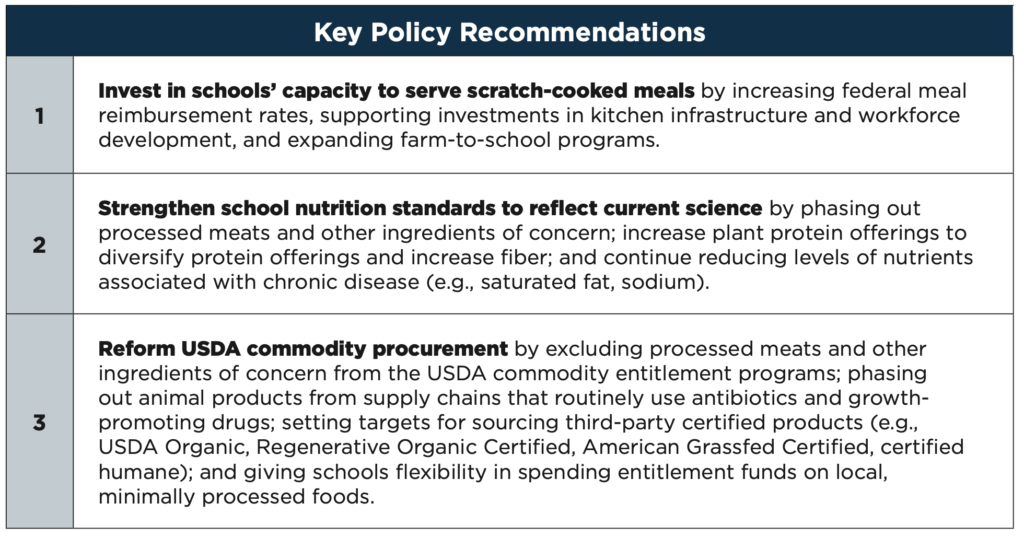
En definitiva, mejorar las comidas escolares no consiste en eliminar ningún alimento o ingrediente en particular. Se trata de alinear las políticas federales, las compras y la inversión pública con los avances científicos en nutrición, y garantizar que las escuelas cuenten con los recursos necesarios para servir comidas elaboradas con ingredientes mínimamente procesados y de alta calidad, y con fuentes de proteínas más diversas que promuevan una salud óptima a lo largo de la vida.
Formas de apoyar nuestro trabajo

Lea las últimas noticias
Manténgase informado e inspirado. Lea nuestros últimos comunicados de prensa para descubrir cómo estamos contribuyendo al planeta.

Vea nuestro impacto
Vea las verdaderas victorias que su apoyo hizo posibles. Lea sobre los triunfos de campaña por los que hemos luchado y ganado juntos.

Dona hoy
Contribuye a impulsar el cambio. Se necesita el apoyo de defensores del medio ambiente como tú para construir un mundo más sano y justo.