



Toxic Acres
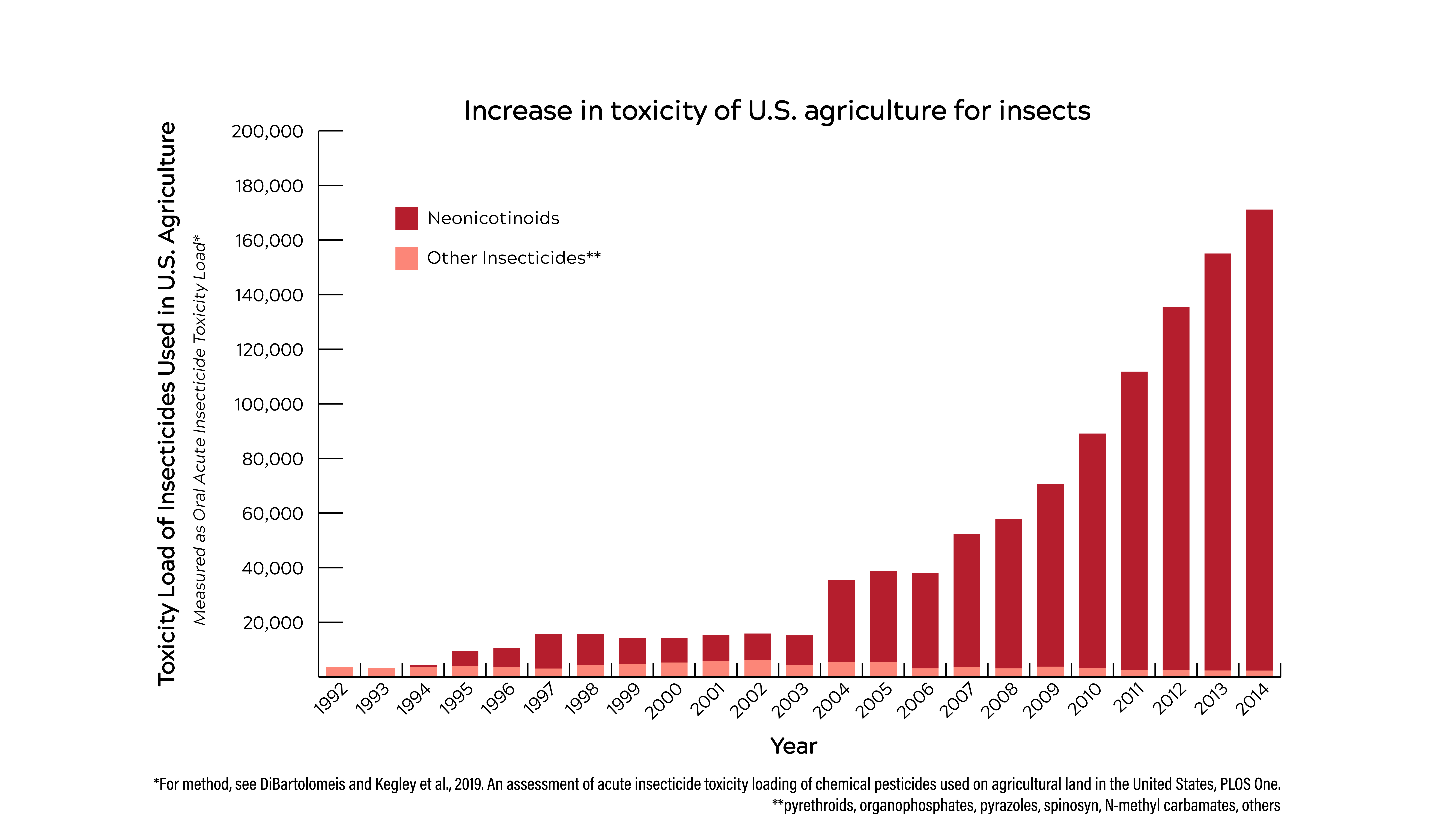
This peer-reviewed study shows an explosion in the toxicity of U.S. agriculture for insects over the past two decades. The study found that U.S. agriculture is 48 times more toxic to insect life than it was before neonicotinoid insecticides were first commercialized in the 1990s. We found that neonicotinoids account for 92 percent of this increase because they are considerably more toxic to insects and far more persistent in the environment than other commonly used insecticides.
Other research has revealed important parts of this picture — how toxic neonicotinoids are for bees and other insects, how many pounds are used each year and how long these chemicals persist in the environment. This study designed a way to combine all of this information to create a “time-lapse” of impact. For the first time, it allows us to quantify how hazardous our agricultural lands have become for insect life by providing a way to compare changes in the toxicity of U.S. agriculture year-to-year. It reveals that the toxicity load has surged dramatically since neonicotinoids were introduced in the 1990s. It also shows an increase in the toxicity load beginning in the mid-2000s, which is when the practice of using neonicotinoids to coat the seeds of commodity crops like corn and soy began.
The study was published in the journal PLOS ONE and co-authored by Friends of the Earth senior staff scientist Dr. Kendra Klein.

Key Findings
- U.S. agriculture is 48 times more toxic to insect life than it was two decades ago.
- Neonicotinoids account for 92 percent of the increase in toxicity.
- The persistence of neonicotinoids creates a cumulative toxic burden in the environment that is much higher than that experienced by insects 25 or more years ago. This is because neonicotinoids are considerably more toxic to insects and far more persistent in the environment than other commonly used insecticides. While others break down within hours or days, neonicotinoids can be effective at killing insects for months to years after application.
- The increase in toxicity measured by the study is consistent with the reduction in beneficial insect and insectivorous bird populations observed in recent years.
- Neonicotinoid use on corn and soybeans contributed the most to the increase in toxicity load.
- The three neonicotinoids that contributed most to the toxicity load are imidacloprid and clothianidin — which are manufactured by Bayer-Monsanto — and thiamethoxam, a product of Syngenta-ChemChina.
- Based on the study analysis, it is clear that existing regulations for the registration of pesticides in the U.S. are not adequate to prevent the introduction of chemicals that can cause catastrophic harm in the environment. The study presents a new method that could be used by the Environmental Protection Agency to assess future potential risks to biodiversity before introducing new pesticides into the environment.
Why It Matters
This study comes on the heels of the first meta-analysis of global insect decline, which found that 40 percent of insect species could face extinction in coming decades, leading the authors to warn of “catastrophic ecosystem collapse” if we don’t change the way we farm. In addition, a recent global scientific assessment warns that the ecological crisis of biodiversity loss is on par with the climate crisis.
Insects make up the basis of the food webs that sustain life on Earth and play a critical role in the agricultural production of crops that feed us all. Pollinators like bees are responsible for 1 in 3 bites of food we eat. Without them, we would face shortages of some of our most nutritious foods, including nuts, fresh fruits and vegetables, meat, dairy and more.
A growing body of evidence points to neonicotinoids as a significant driver behind insect declines. They are approximately 1,000 times more acutely toxic to honeybees than the infamous pesticide DDT from Rachel Carson’s Silent Spring. And, unlike other common insecticides, they can kill insects for months to years after application, which creates a compounding toxic burden in the environment.
How Did We Get Here?
Neonicotinoids are the most widely used insecticides in the world
Neonicotinoids, or neonics for short, were first introduced in the 1990s. They are now the most widely used insecticides in the U.S. and globally. They are used on more than 140 crops, from soybeans to apples to almonds. Neonics are chemically similar to nicotine and are designed to kill insects by attacking their nerve cells. Neonics are also “systemic,” meaning they dissolve in water and are absorbed by plants, making the plant itself—including its nectar, pollen, and fruit—toxic.
The role of neonicotinoid seed coatings
The study found that corn and soybeans are the two crops most responsible for the increase in toxicity. Neonicotinoid use rose dramatically starting in the early 2000s when they began to be used as coatings on soybean and corn seeds. Seed coatings now account for approximately 80-90 percent of total neonicotinoid use in the U.S.
Science shows that neonicotinoid seed coatings provide almost no benefit to farmers but come at a high cost to the environment. Only about 5 percent of the neonicotinoid coating is absorbed by the plant — the other ~95 percent is left in the soil where it can harm wildlife and run off to contaminate rivers, lakes and drinking water sources.
Research shows that farmers could stop using coated seeds without harming their crop yields or their incomes. But farmers typically can’t find uncoated seeds (unless they purchase organic seeds) because pesticide companies have dominated the seed market. The Environmental Protection Agency determined that neonic-coated seeds provide “little or no overall benefits to soybean production,” yet nearly half of all soybean seeds in the U.S. are treated. Similar analyses have found no economic benefit to farmers from neonic-coated corn, yet up to 100 percent of U.S. corn seeds are treated.
What Else Is Science Telling Us About Neonics?
Neonicotinoids are highly toxic to pollinators and other insects
A large and growing body of research shows that neonicotinoids have inflicted serious damage to pollinators and other beneficial insects and are a leading cause of massive declines in bee populations. Neonicotinoids both kill bees directly as well as compromise their behavior, health and immunity, leading to bee deaths from pathogens and parasites. In addition to commercial honey bees, many of the more than 4,000 species of native bees that live in the U.S. are even more vulnerable to neonicotinoid exposure.
Neonicotinoids are toxic to other wildlife
The compounding toxicity of neonicotinoids in the environment is also of concern for other wildlife. These insecticides have been linked to bird declines, and research has found that a single neonicotinoid-coated corn seed can kill a bird. Because neonicotinoids are highly water soluble, they are readily carried into waterways by rain or irrigation water. The U.S. Geological Survey has found that neonicotinoids contaminate lakes and rivers nationwide, often at levels that harm critical aquatic insects and other wildlife. Recent research has also found that they can harm white-tailed deer.
Neonicotinoids harm human health
Neonicotinoids attack parts of insect nerve cells that are similar to those found in humans, raising concerns that they could also be harmful to human health. Emerging research suggests that exposure to neonicotinoids in the womb or early in life could be linked with developmental defects, autism, heart deformations, muscle tremors and memory loss. Neonicotinoid residues on food cannot be washed off because they are systemic insecticides, meaning they dissolve in water and are taken up into the plant itself.
Stopping the Insect Apocalypse
More than five decades ago, Rachel Carson warned that the war we are waging against nature with toxic pesticides is inevitably a way against ourselves. That is as true today as it was then.
How Friends of the Earth is taking action
Learn how we are fighting for policy change and market shifts to protect the health of people, pollinators and the planet from toxic pesticides and how you can join us!


