

Mining Tourism in Mongolia
A Journey Through Environmental Degradation
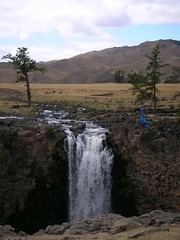 For two weeks in September 2008, I voyaged across Mongolia with a caravan of local environmental activists and international environmental NGOs. Our journey took us from the capital and metropolitan hub of Ulaanbaatar to the forests of Eroo on the northern border with Russia, across the great expanse of the Gobi Desert 80km from the Chinese border, and through many places in between. Although I was experiencing the wonders of Mongolia’s stunning landscapes for the first time, this was not a typical tourist trip. This was ‘mining tourism,’ led by seven Mongolian environmental groups eager to show the international community the environmental degradation and socio-cultural issues arising from the country’s rapidly expanding mining industry. Below are my observations of the complex factors at play as Mongolia struggles to find a sustainable balance between desperately needed economic development and preservation of the land that is their lifeblood.
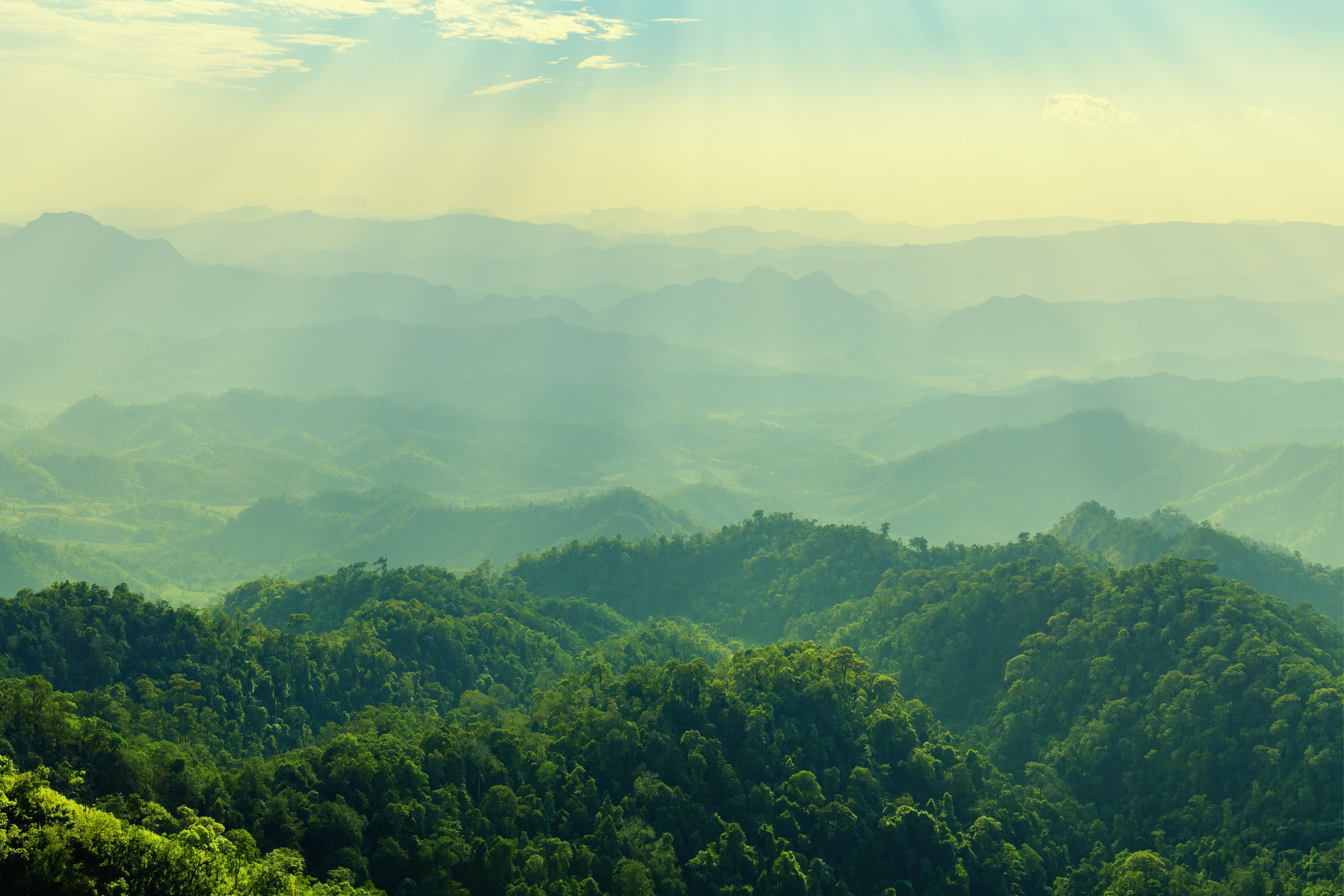
Mongolia is arguably the last pristine country in Asia. Its modest 2.5 million people are spread among the vast prairie steppe, desert plains, forests and mountain areas that, geographically, make up the world’s fourth largest country. They share this unique landscape with an equally diverse range of plants and animals, including new species of spiders, mice and medicinal plants that scientists recently discovered in the country’s northern forests and rare and endangered species of large fish that are no longer found in natural environments anywhere outside of Mongolia.  For somebody constantly surrounded by the hustle and bustle of a metropolitan area, I was particularly soothed by listening to the wind blow across the peaceful steppe, unhindered by the buildings of our civilized urban centers; driving for hours across the unpaved expanse, laying eyes only on herds of goats or yaks and the occasional solitary ger; and by the breathtaking beauty of the Gobi Desert’s night sky, with unobstructed views of all the Milky Way’s swirls dashed across outer space’s endless canvas. Our Mongolian guides appreciated their awe-inspiring environment as well, singing songs about the rivers and offering toasts to the sky whenever we reached a mountaintop.
Increasingly, our guides and their countrymen and countrywomen are aware of another reason they can appreciate their land: for the mineral rich earth below the surface. Large deposits of gold, copper, coal, oil and other minerals have all been found in Mongolia in the past decade and with them, the possibility of economic prosperity. One of the largest mineral deposits being explored right now is the Oyu Tolgoi Copper deposit in the South Gobi. The exploration area is larger than Florida and the annual profit from output could double Mongolia’s present GDP.
Many believe the increase in GDP could be a blessing for the country, particularly since structural adjustment policies to convert Mongolia into a market-based economy that began in 1990 have failed to bring economic prosperity to the vast majority of the country. It has, however, succeeded in bringing growing frustration about significant income disparity, high levels of unemployment among young males, official corruption, and lack of social services such as healthcare, education and welfare. Just two months before the start of the trip, exasperation with these issues seemed to be at a boiling point as people took to the streets of the capital after Parliamentary elections, decrying election fraud and manipulation by some political candidates and their powerful backers.
The Mining
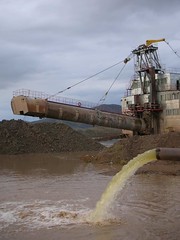 How and to what extent mining is developed have serious implications for the social, environmental and cultural sustainability of the country. According to The Asia Foundation’s semi-annual corruption survey, mining is consistently perceived to be among the most corrupt sectors in Mongolia’s economy. Another study of the country’s top 25 mining companies conducted by Open Society Forum found that USD 25 million in company expenditures were unaccounted for in the government’s books. The ramifications of poor governance were apparent in the blatant violations of Mongolia’s mining and environmental protection laws at several mine sites we visited throughout the country. We saw obsolete equipment destroying riverbeds and dumping contaminated water directly into drinking water sources. We saw companies mining without the appropriate licenses and heard rumors of bribes exchanged in order to keep the companies in business. We witnessed the damage of inadequate reclamation as evidenced by large sections of land still uprooted and disheveled long after the mining companies had dredged up their last scoops of gold and moved on to unexplored land.
 According to the Mongolian environmental groups, the results of these violations have been drastic. Less than 1% of Mongolia’s land is covered by water and because of the growth in the mining sector, 702 rivers and 760 lakes have dried up. It is a problem of alarming proportion and grave consequence for Mongolians because their traditional nomadic herding lifestyle relies on the availability of rivers and grassland pasture. In the Northern provinces by the Russian border, which is the most heavily forested part of the country, mining is also contributing to the deforestation of what little forest cover this mostly grassland- and desert-covered country has. In 1992, forests comprised roughly 10% of Mongolia’s land, but by 2006, the percentage of forested land dropped to just over 6%. Of global concern, desertification is causing the Gobi Desert in the south to spread further and further into China, with many worried that it will one day overtake Beijing. Already, dust storms from this vast region push southeast, reaching the Chinese capital and even the west coast of the U.S.
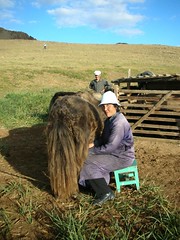
Rural communities and herders are often the first to feel the impacts of irresponsible mining. An 80-year-old woman told us that she could no longer drink the water near her ger because a mining company was using it to power their operations. Herders told us that they increasingly search in vain for pasture to feed their animals after the rivers and lakes began drying up. Community members vented their anger about mining companies that brought hardship to them without paying a penny in taxes on the land they dug up or the profits they garnered.
The Economics of Mining
Multinational companies often play a key role in Mongolia’s mining sector. The majority of investment in Mongolia’s medium and large-scale mining operations are from foreign sources, including China, Russia, Canada and Japan. The Canadian-owned Ivanhoe Company is prospecting one of the largest copper mines in the world at Oyu Tolgoi. Mining investments from China have helped make it the country’s largest trading partner, accounting for around 40% of Mongolia’s total foreign direct investment. This has included an unconditional USD 300 million loan and over USD 790 million investment  in large infrastructure projects, including a cross-country railroad linking Mongolia’s mining areas to China’s industrial centers. Additionally, China consumes about 90 – 95% of mineral exports from Mongolia to fuel its own industrialization. With its high demand for mineral resources, analysts say the world would need more than one Oyu Tolgoi to keep pace with current consumption growth.
Despite the presence of international stakeholders in all aspects of Mongolia’s mining, little attention is paid to international standards such as the Extractive Industries Transparency Initiative (EITI). The Mongolian groups I met with indicated that they are increasingly concerned about the mining activities of Chinese companies. According to the groups, these companies frequently use mercury, and sometimes cyanide, in the extraction of gold. These chemicals are used in order to increase the amount of gold that can be extracted from land that has already been raked over. The chemicals present significant health and environmental concerns when not properly handled. There have been several chemical spills in rivers, and humans and animals have been exposed to toxins.
Working Towards a Solution
As bad as mining in Mongolia seems, there are indications that it is still relatively contained. Of the 6,000 mining licenses issued by the government so far, the vast majority are for exploration, while only 1,000 are for extraction. As one mining industry professional put it, “the mining boom hasn’t even begun.” However, the country is indeed on the cusp, particularly if those exploration licenses turn to extraction licenses. The worry among Mongolian citizens is that the impact on communities from relatively limited mining has been substantial, and an increase in mining will be devastating. If this is just the beginning of the ‘mining boom,’ then what future hope is there for the country’s fragile ecosystem?
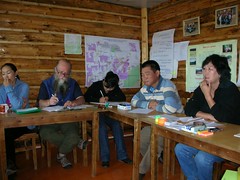 There are many passionate and determined Mongolian civil society groups dedicated to preventing further environmental damage from the mining industry. The Onggi River Movement, whose director Munkhbayar won the Goldman Prize in 2007, along with six similar river movements from across the country are working together for their common cause. With the organizational resources of the Center for Citizenship Education, they have launched efforts to improve the protection of the rivers and land through advocating for stricter government regulations for the mining industry. They are seeking to pass legislation during 2008-2009 that strengthens existing watershed and forestry regulations and increases the Mongolian government’s ownership and oversight of the most important mining projects. As mining by companies with international ties is expanded, the civil society groups are seeking to collaborate with international NGOs to put pressure on these companies to meet international standards.
International environmental organizations can help as well, by advocating for increased cooperation in sustainability work between Mongolian civil society groups and stakeholders from the countries that play a role in the mining industry. One of the ways Friends of the Earth can help the Mongolian river movements is to address the poor practices of transnational mining companies in our work on sustainable trade and investments. In particular, Friends of the Earth-US is well placed to raise the profile of the Mongolians’ concerns about Chinese investment in their country because of our program work on Chinese overseas investments and sustainable finance. In these ways we hope to help our Mongolian colleagues realize sustainable development for their people and a healthy planet for us all.
Related Posts
Ways to Support Our Work

Read Latest News
Stay informed and inspired. Read our latest press releases to see how we’re making a difference for the planet.

See Our Impact
See the real wins your support made possible. Read about the campaign wins we’ve fought for and won together.

Donate Today
Help power change. It takes support from environmental champions like you to build a more healthy and just world.