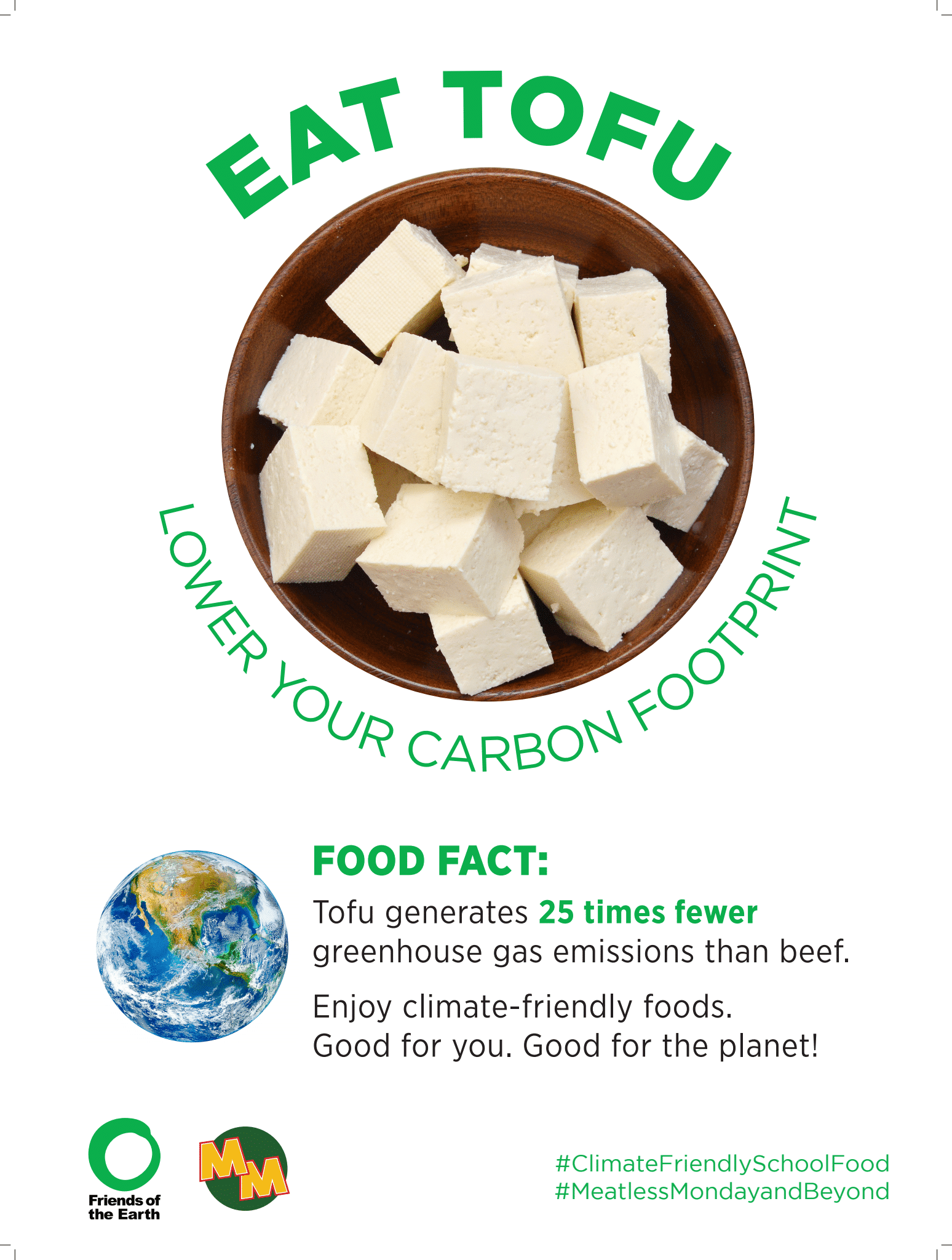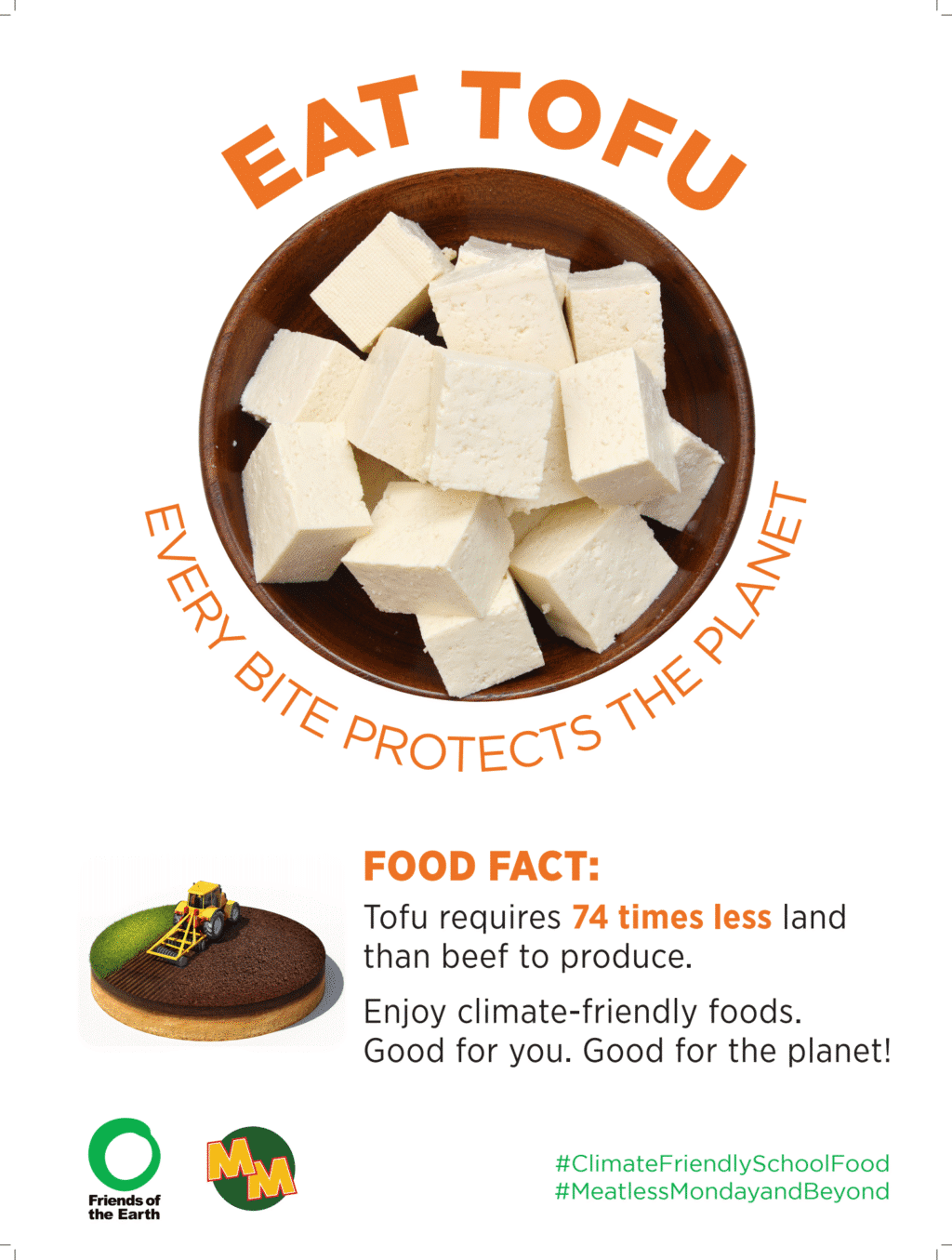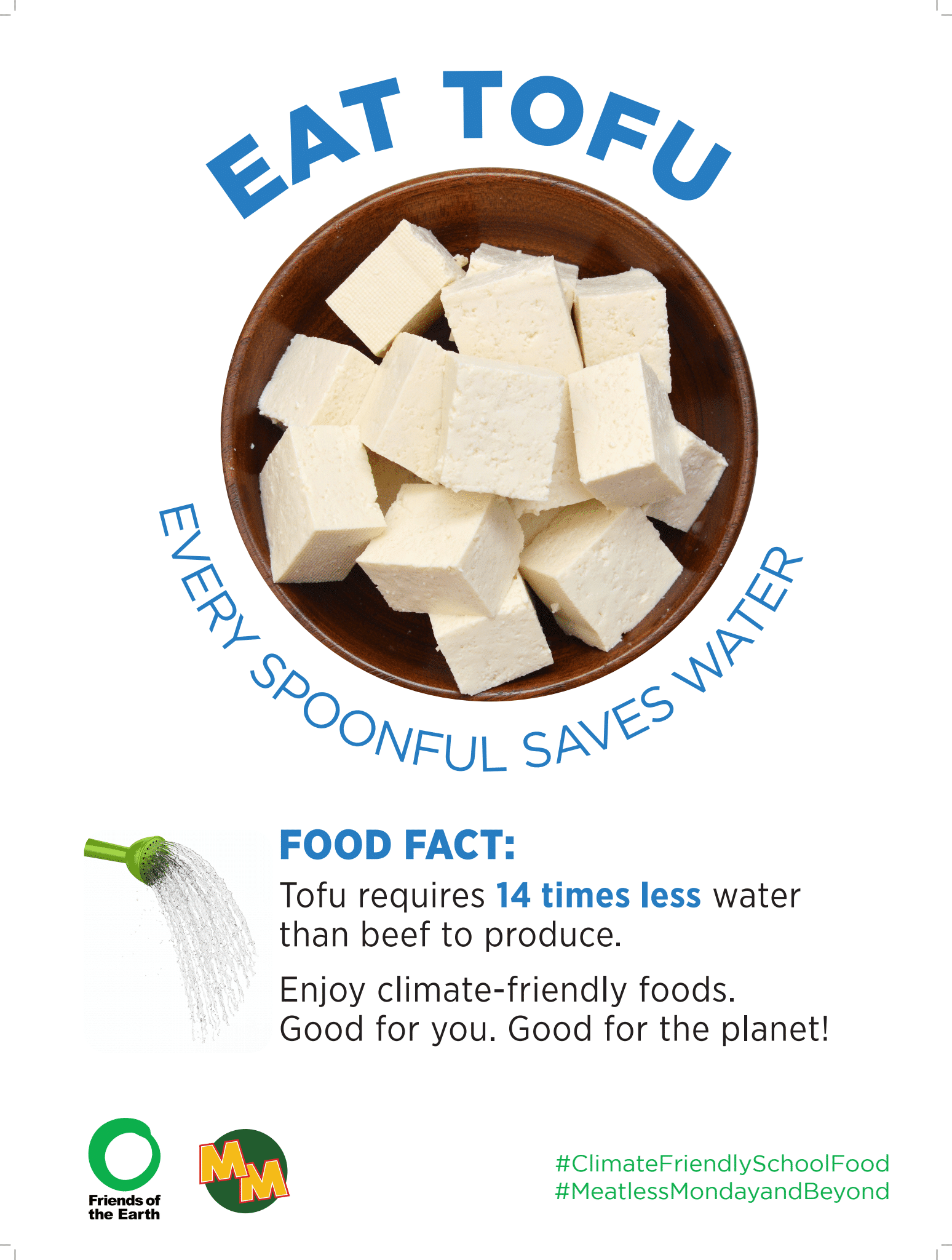



Plant-Based Marketing Materials
Friends of the Earth’s plant-based marketing materials, available in English and Spanish, help promote plant-based options in the cafeteria and engage students with fun, educational content about nutritious staples like tofu and lentils.
These ready-to-use marketing resources, including social media graphics, banners, and stickers, help students understand what “plant-based” means, why it matters for their health and the planet, and how delicious climate-friendly meals can be.
To learn more about how to implement plant-based meals, and where to source ingredients, check out our Plant-Based Vendor List and Strategy Resources.
3×3 Stickers
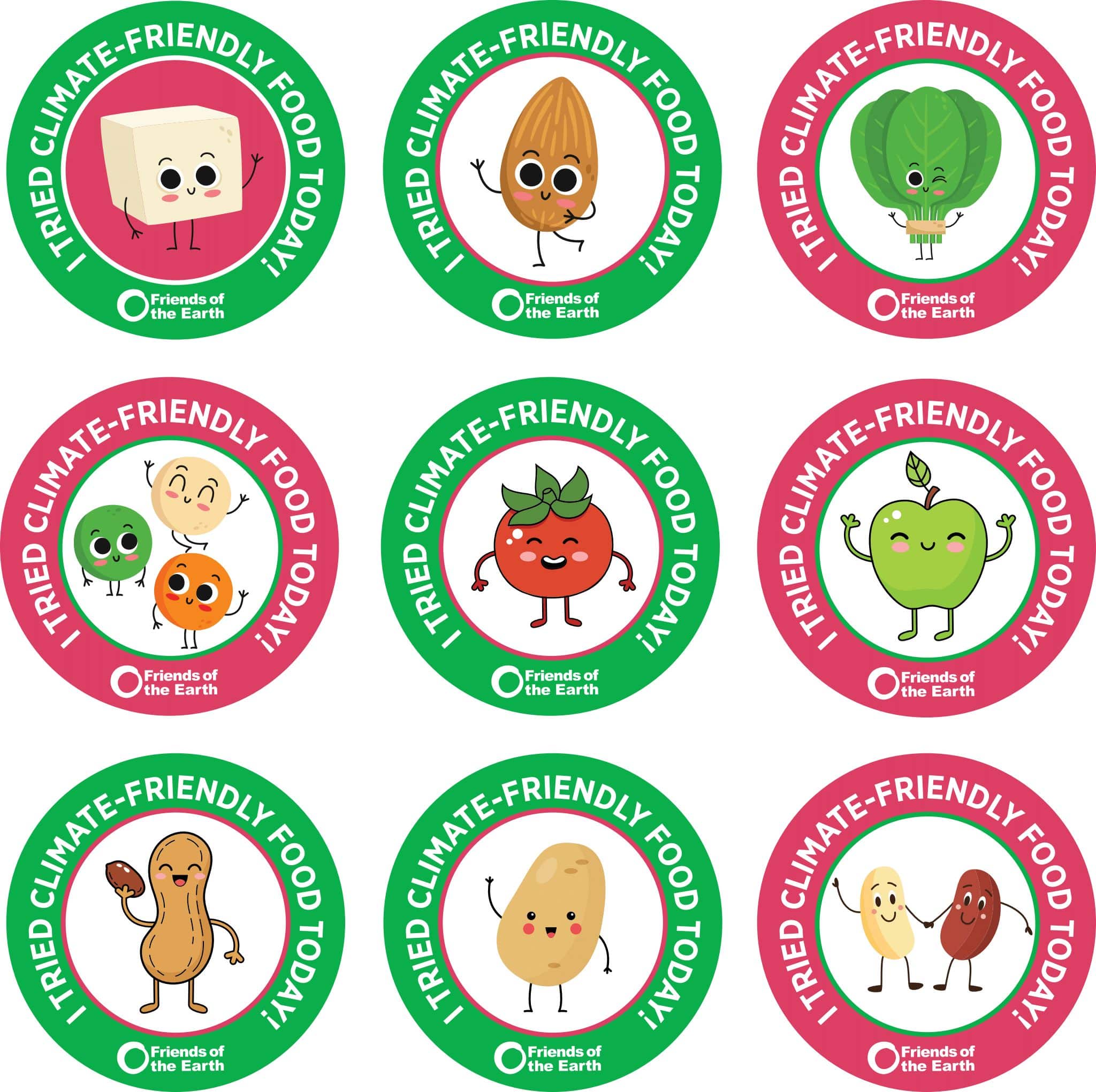
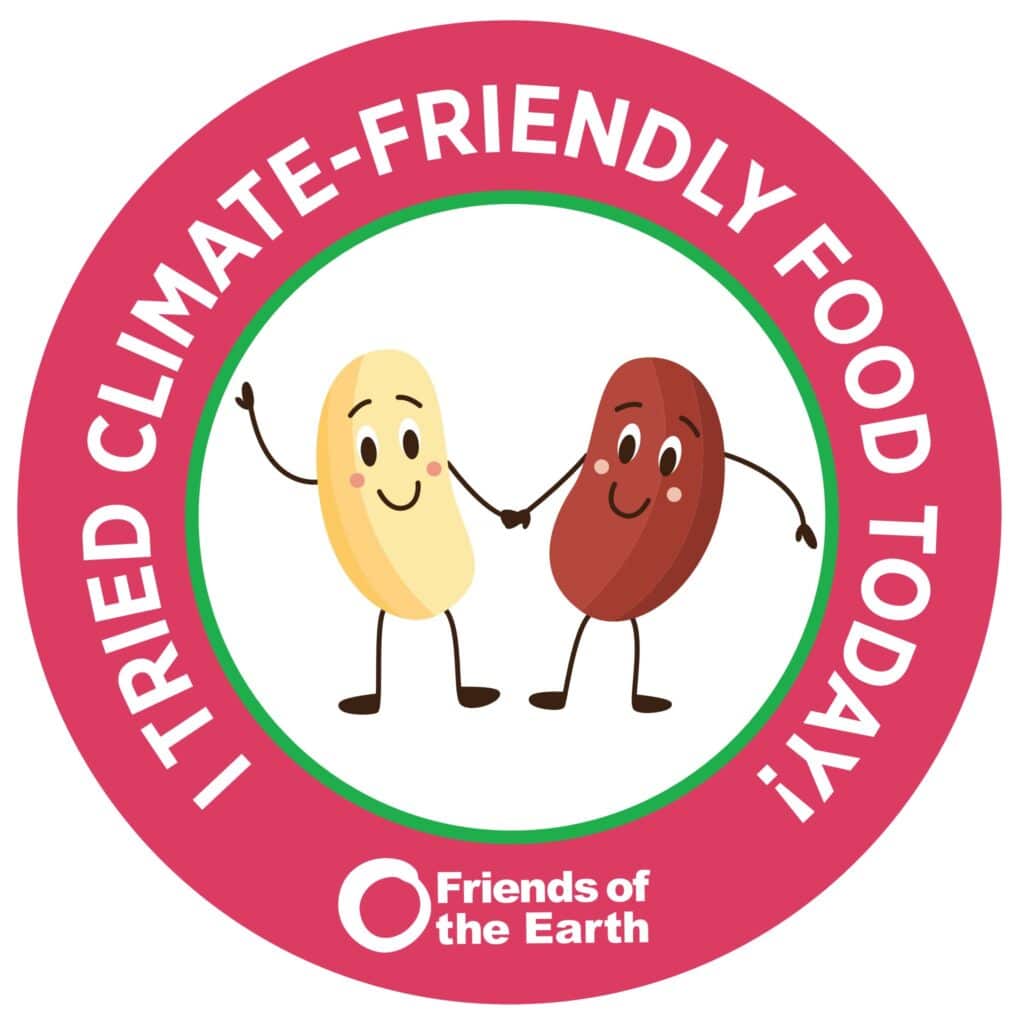
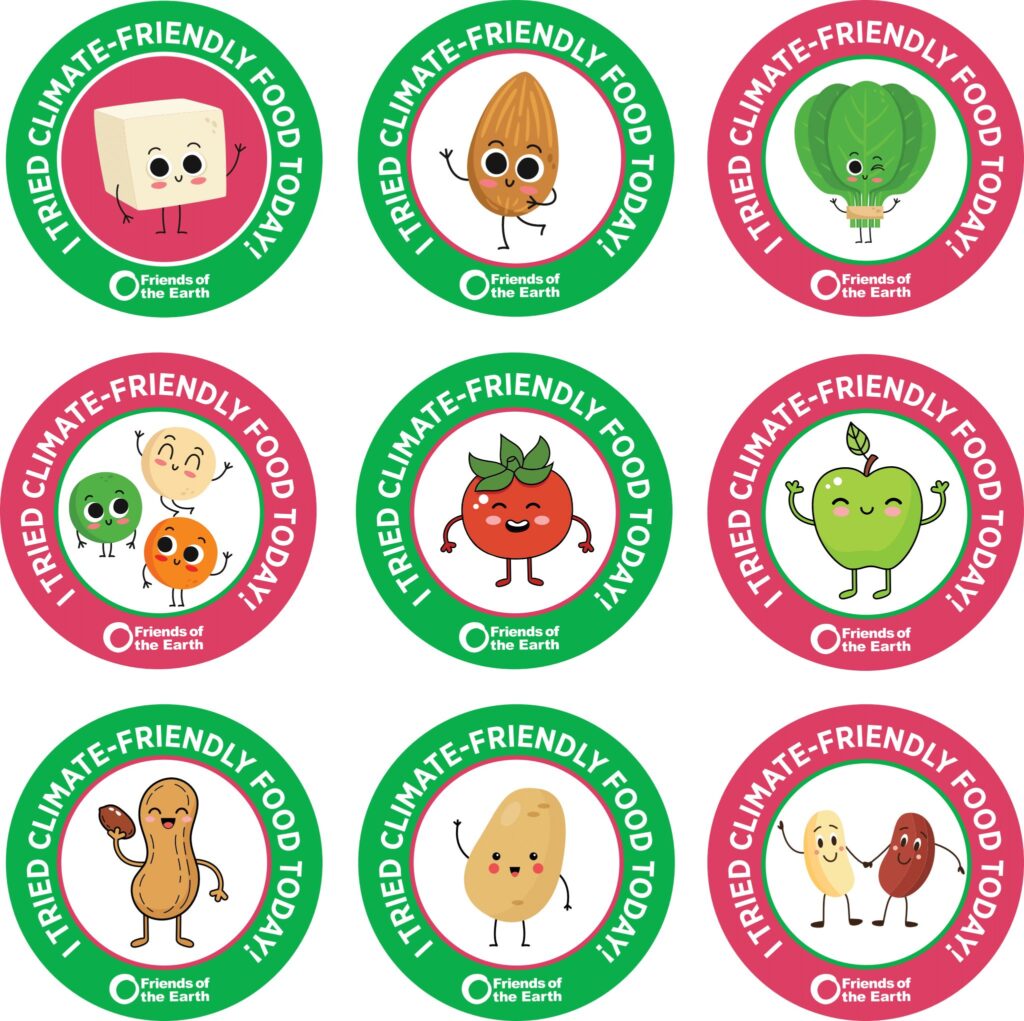
The “I Tried It” stickers (3x3in) are very popular with students. These 3×3 stickers are designed to share with younger students during taste-testing events, as they try new foods. The circular stickers feature nine nutritious foods like tofu, spinach, lentils, and beans, and the caption “I Tried Climate-Friendly Food.”
To print nine different foods at once, use this file.
3×6 Banner Designs
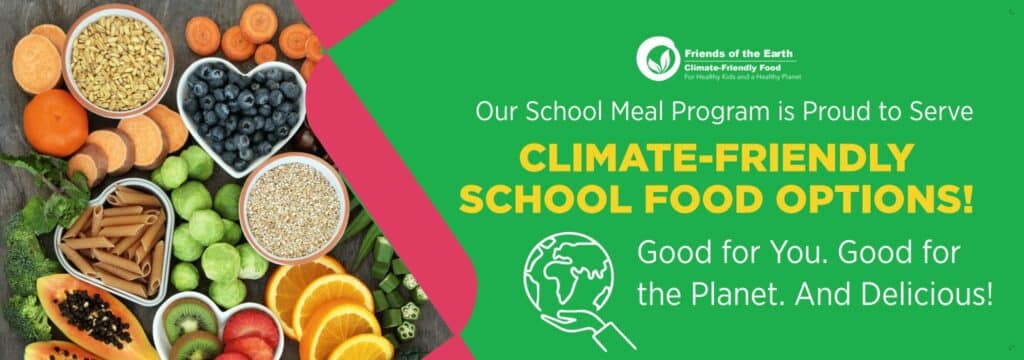
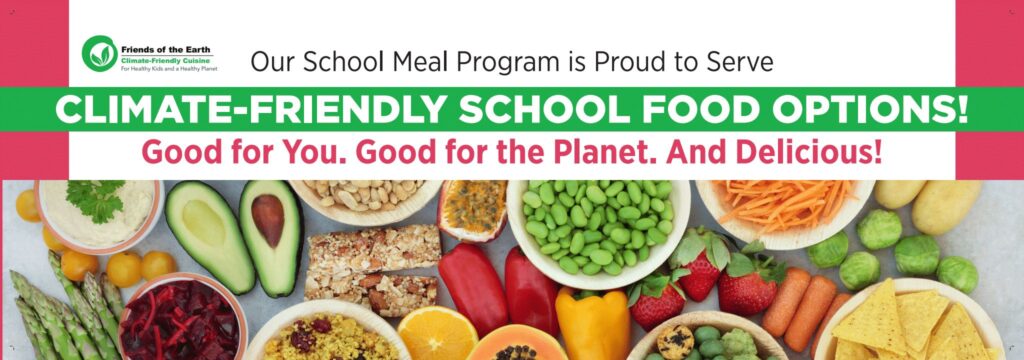
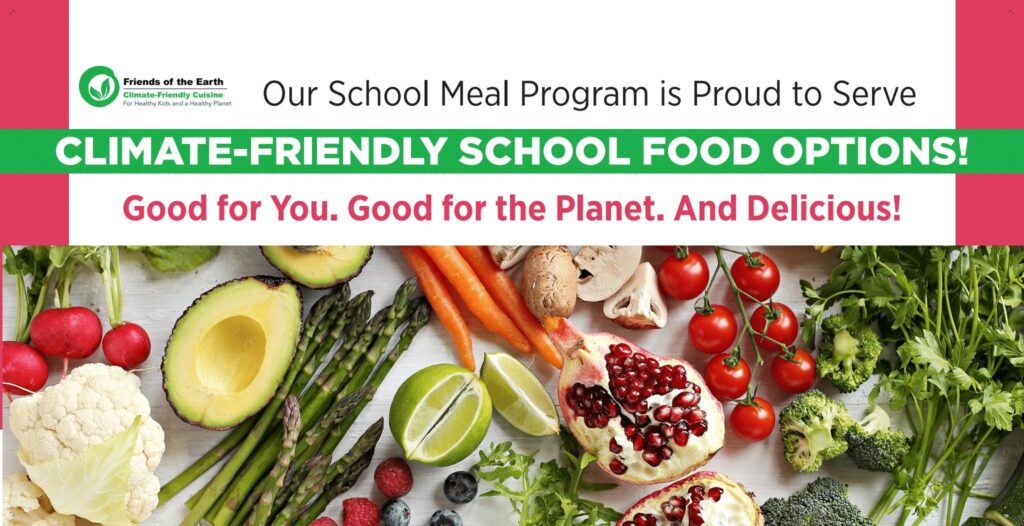
Our climate-friendly food banners (3x6ft) are designed to be printed in a 3×6 format. The banners, which come in three simple, colorful designs, are meant to build awareness for healthy, colorful, climate-friendly food.
This banner is best printed as a 3×6 vinyl banner, available at many online print shops.
6×4 Postcards
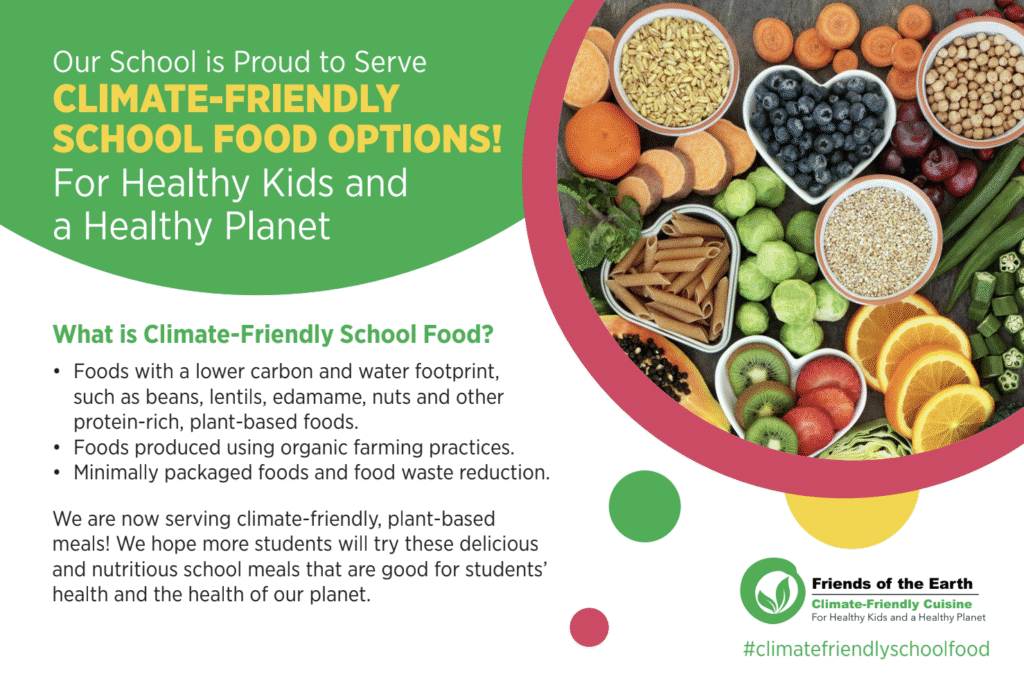
This double-sided postcard, available in English and Spanish, introduces families to the school’s plant-based menu options and highlights the many benefits of climate-friendly food. It also features information about the importance of organic choices and reducing food waste.
Designed for printing on thicker paper, this postcard is an easy, ready-to-use tool for engaging families in your school’s climate-friendly food efforts.
18×24 Posters
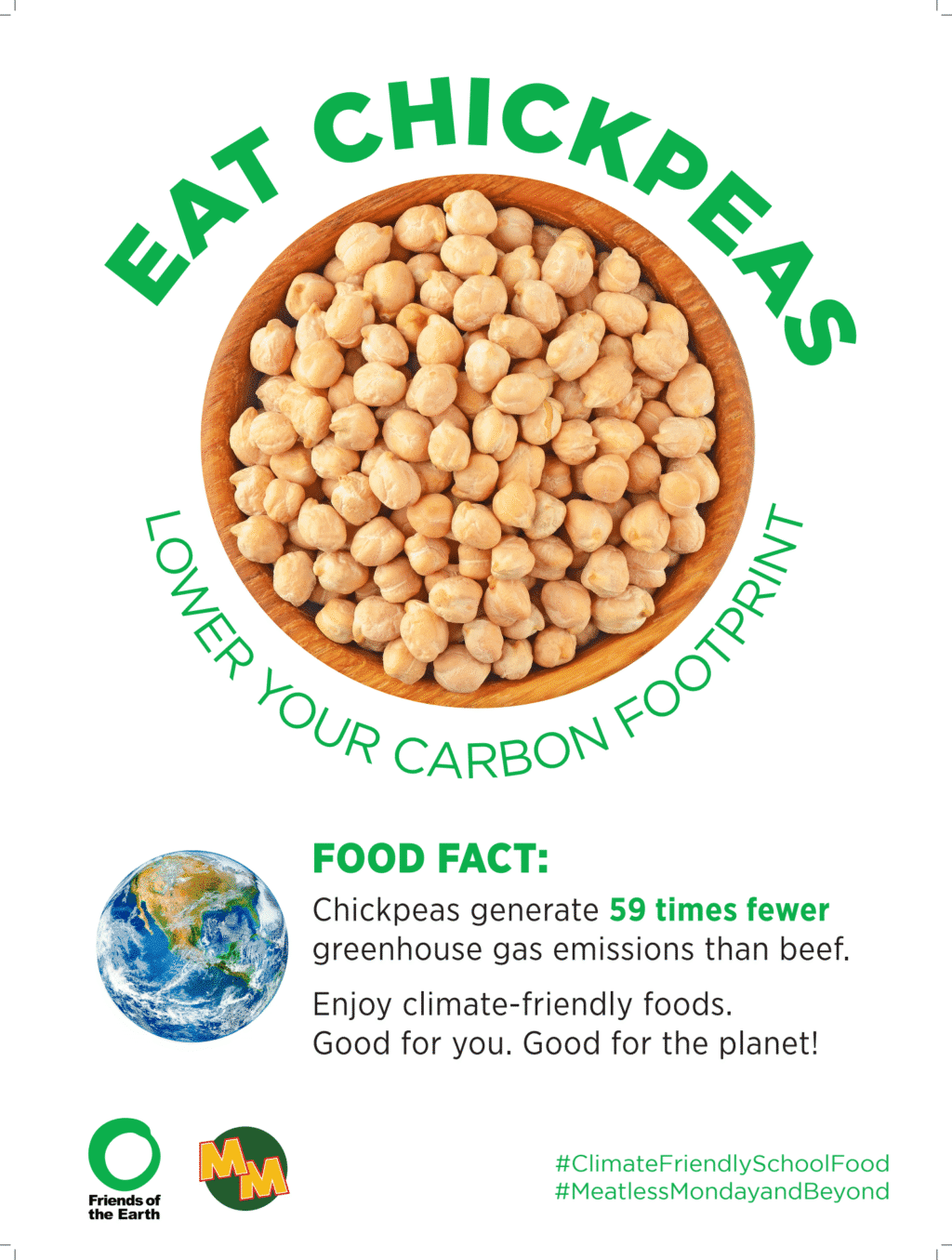
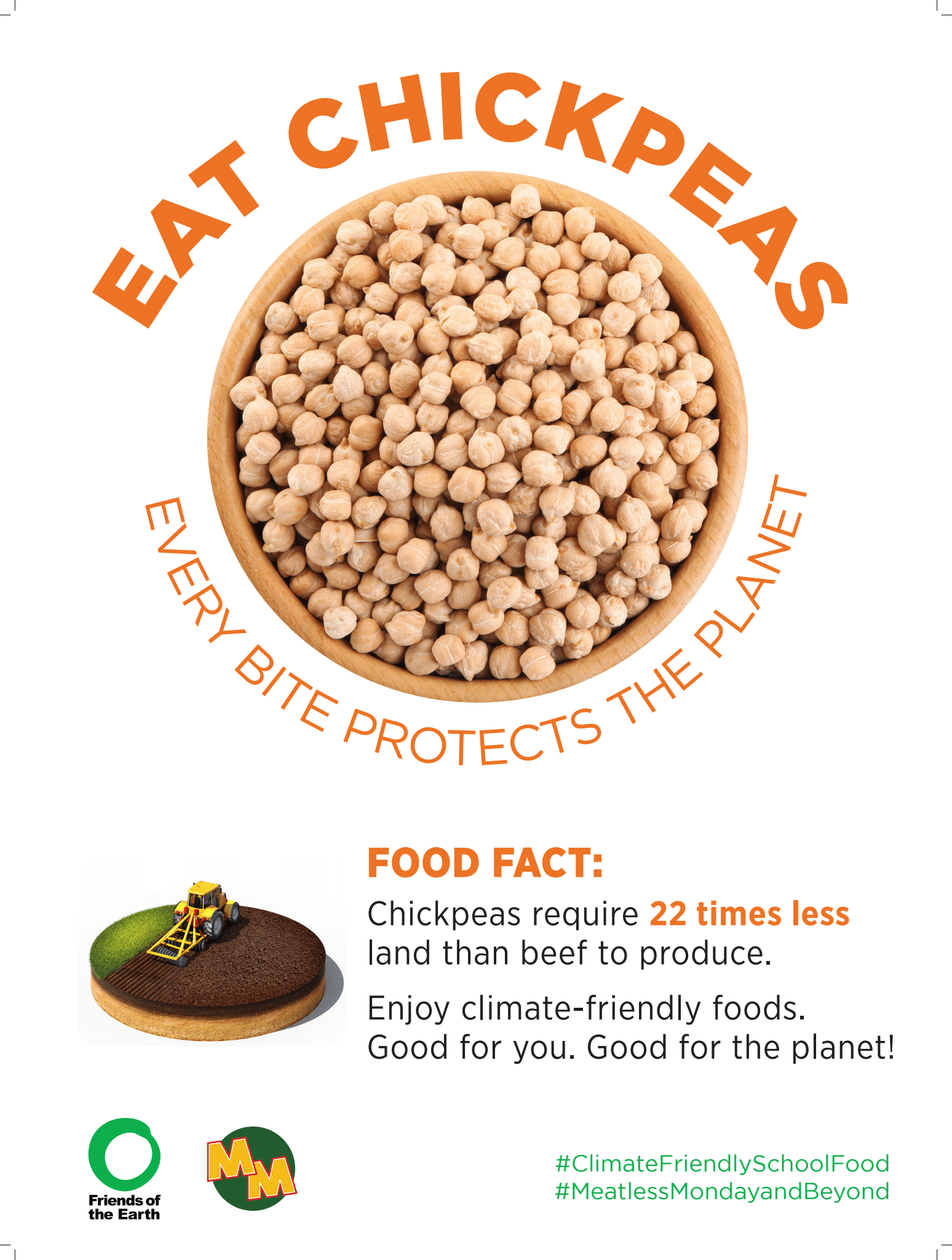
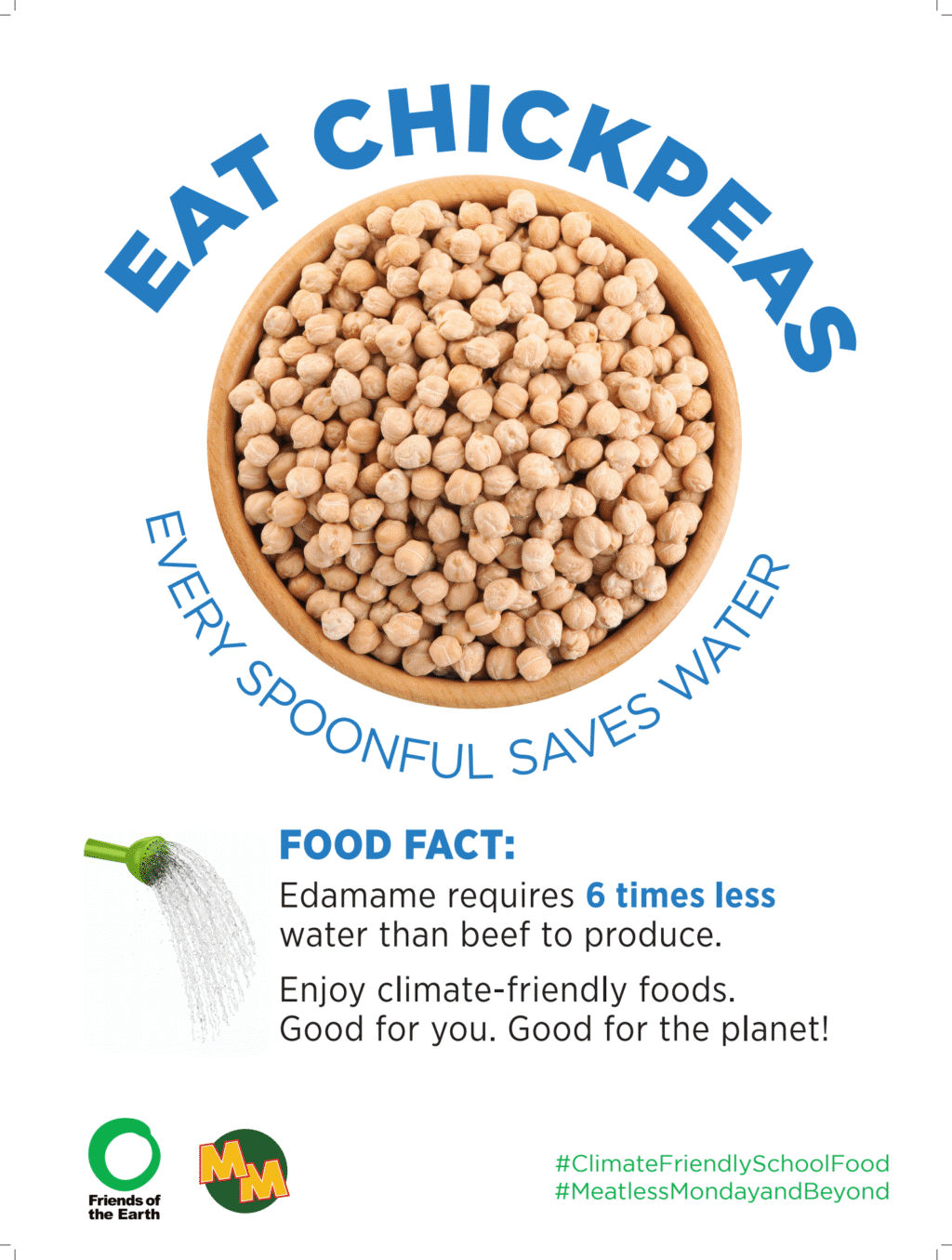
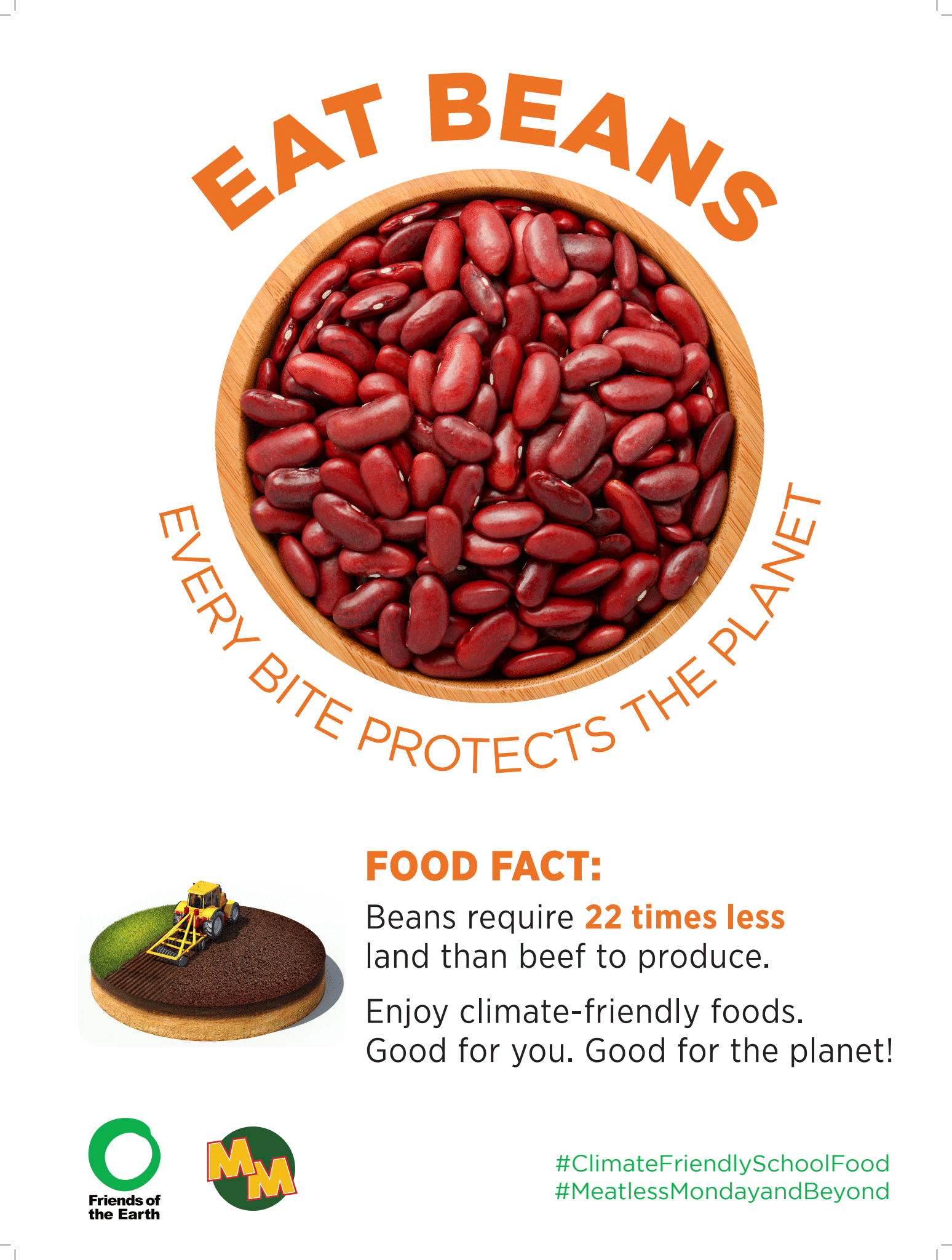
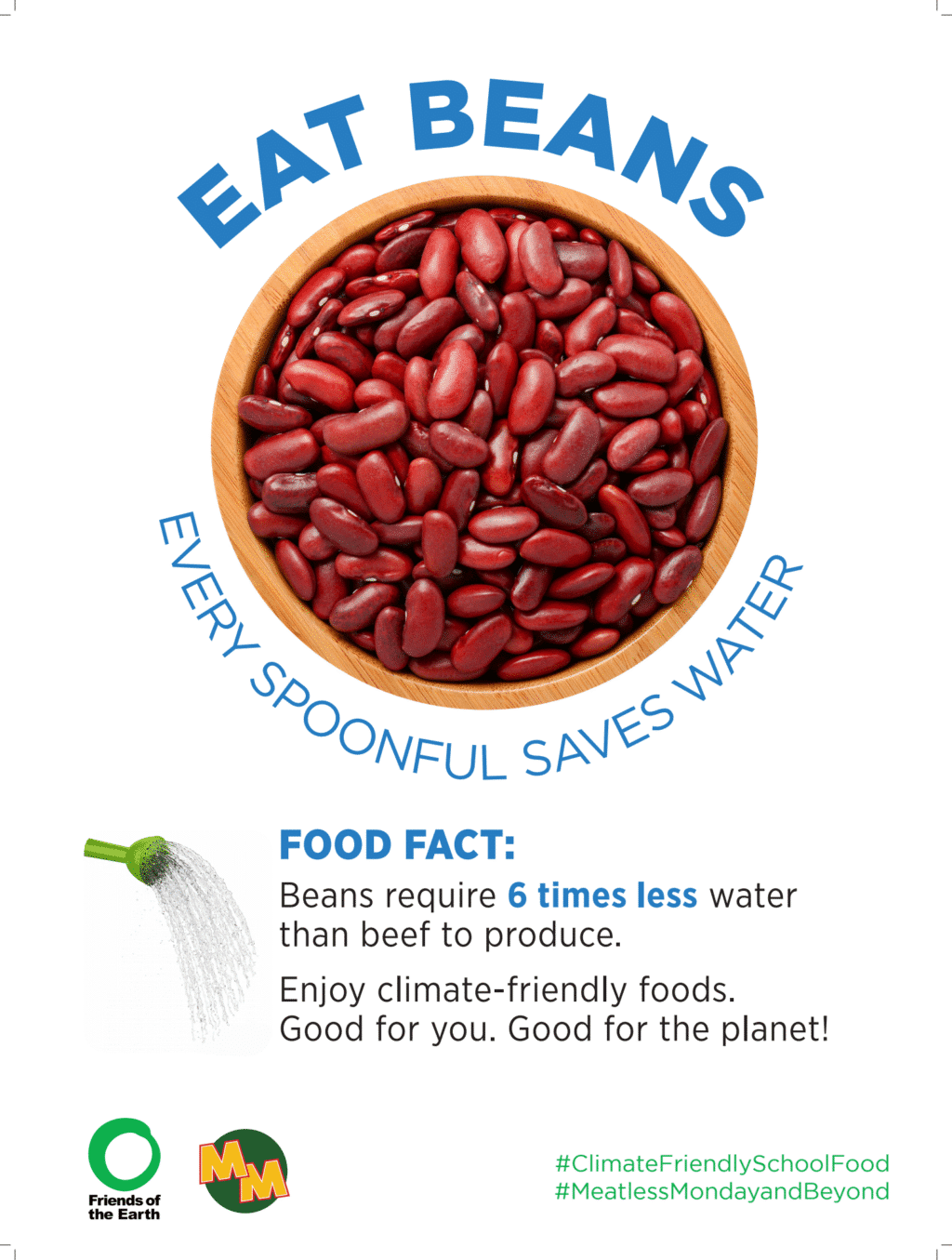
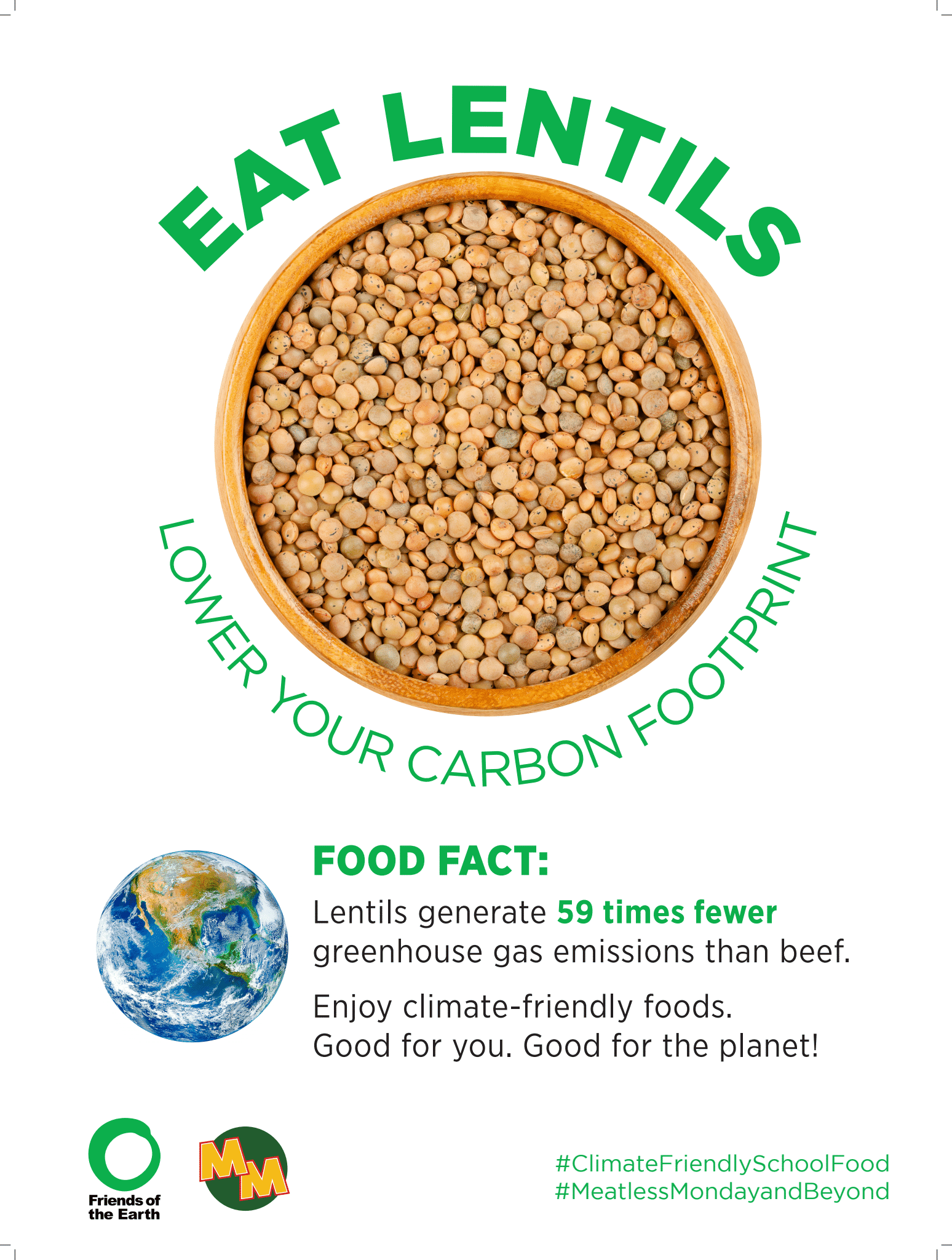
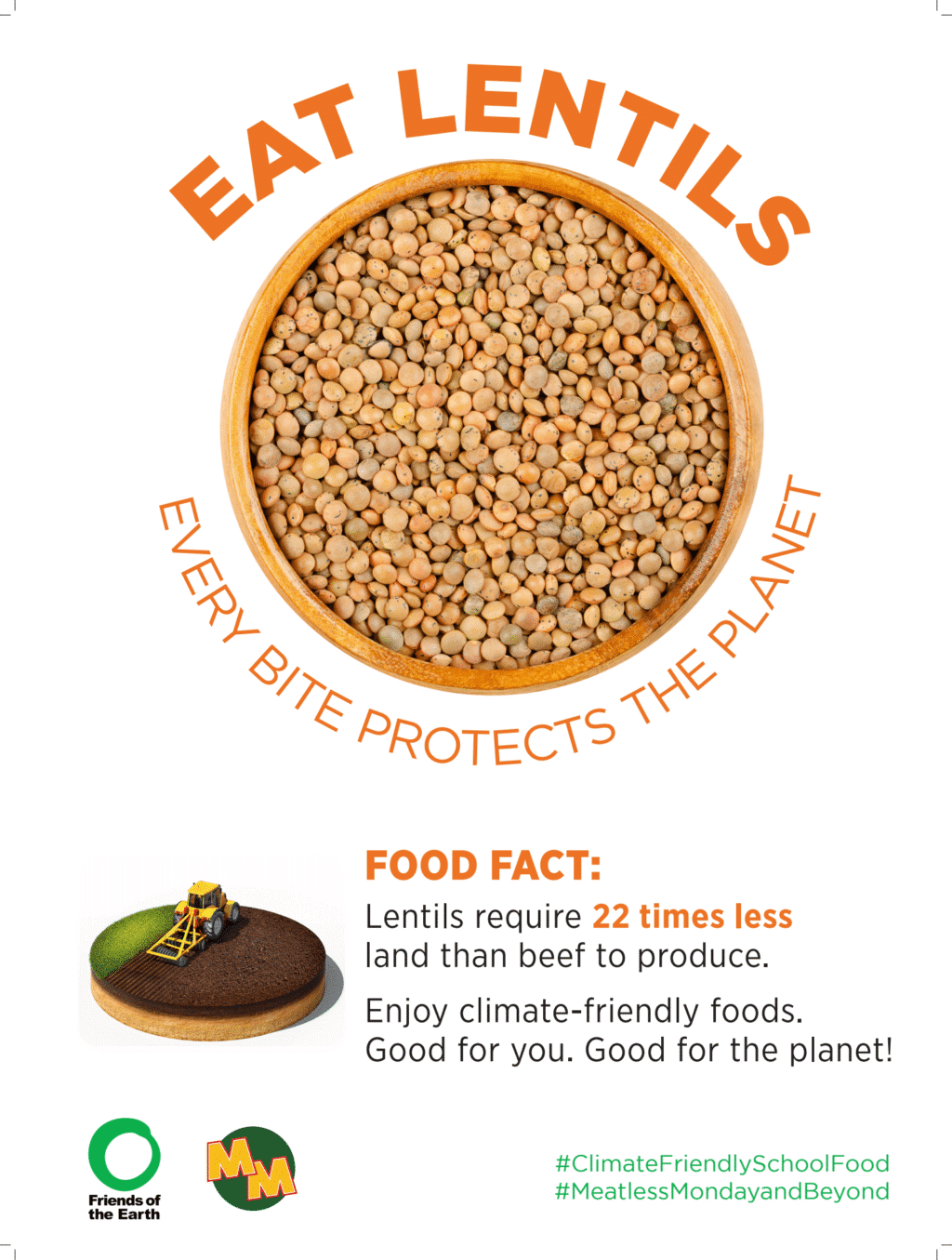
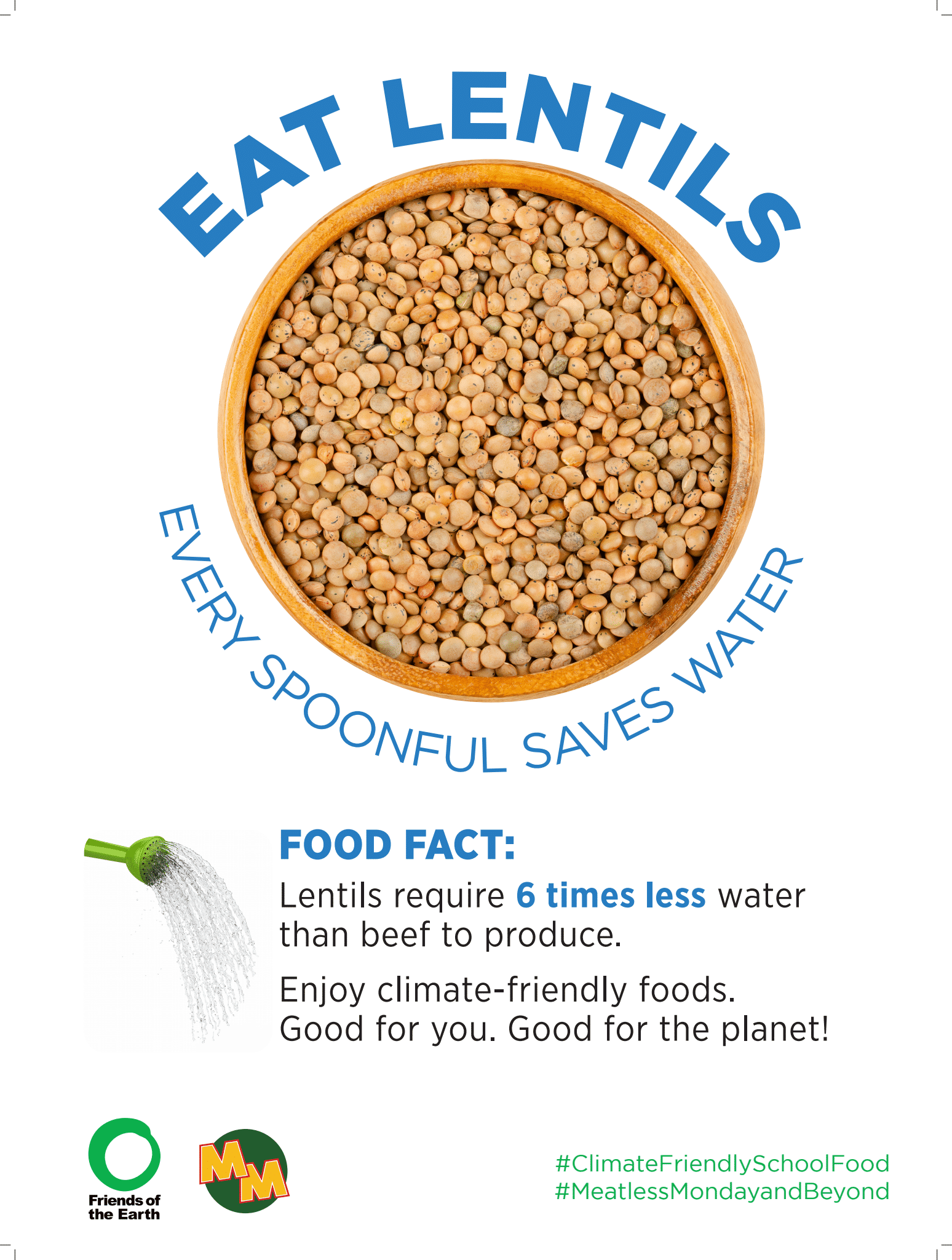
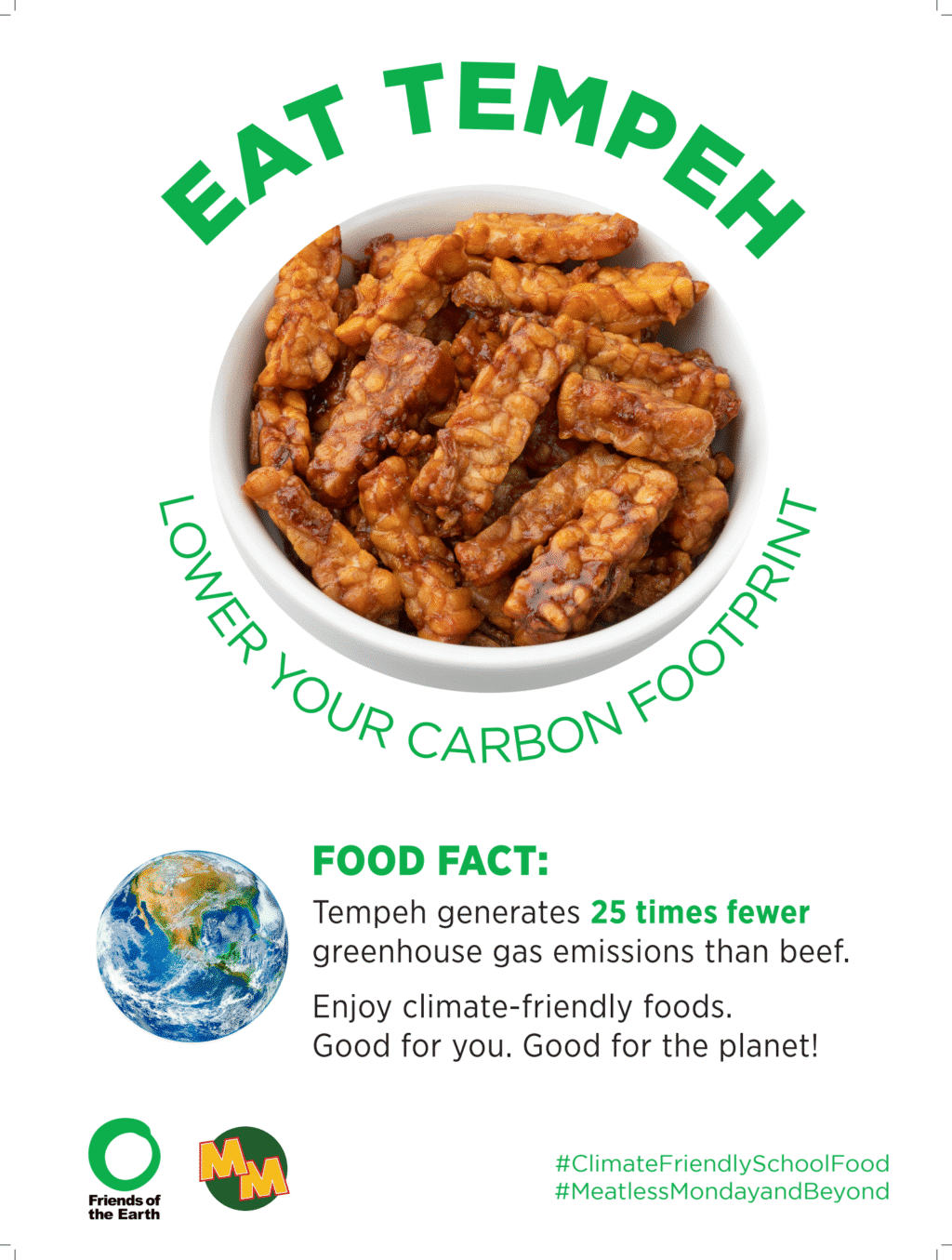
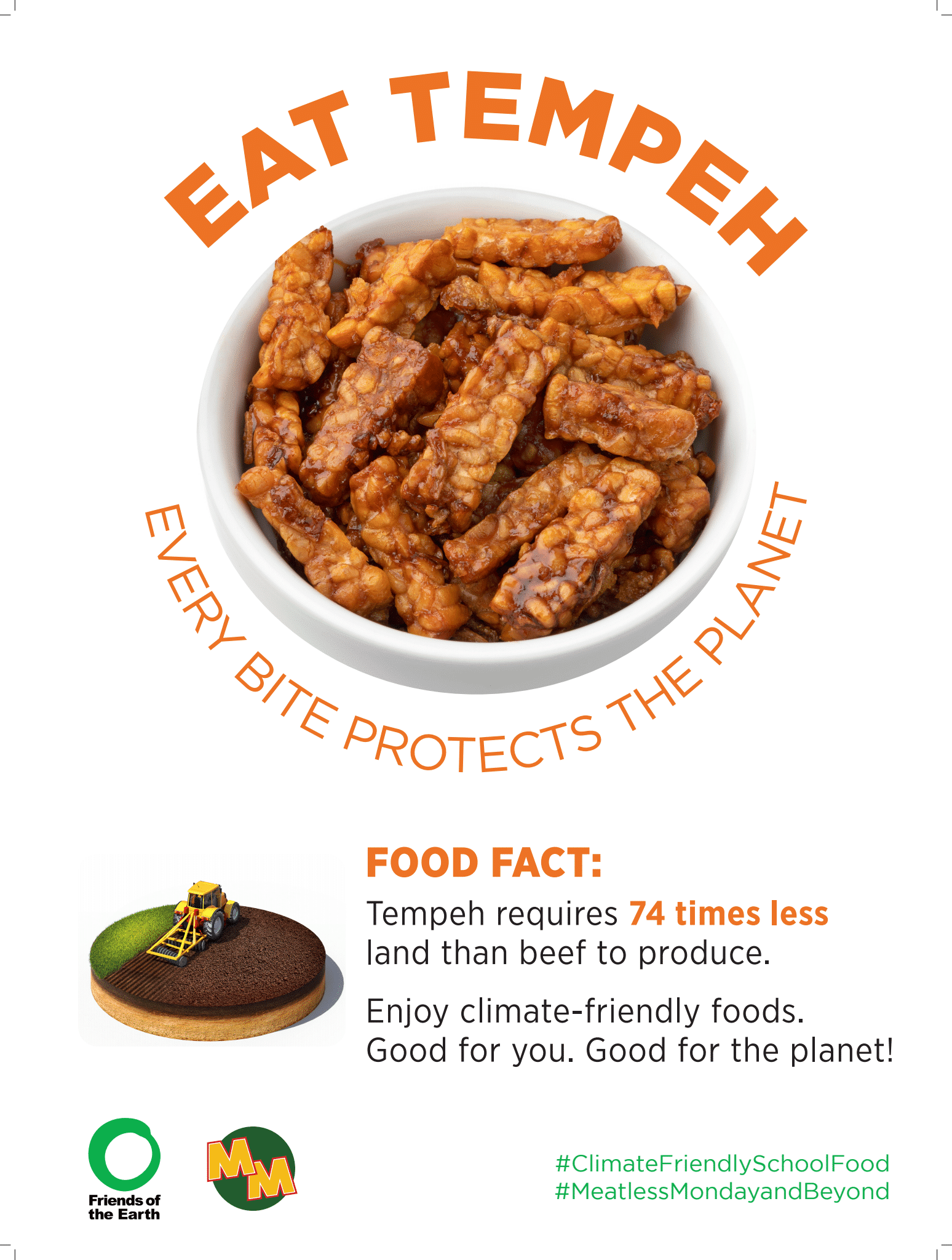
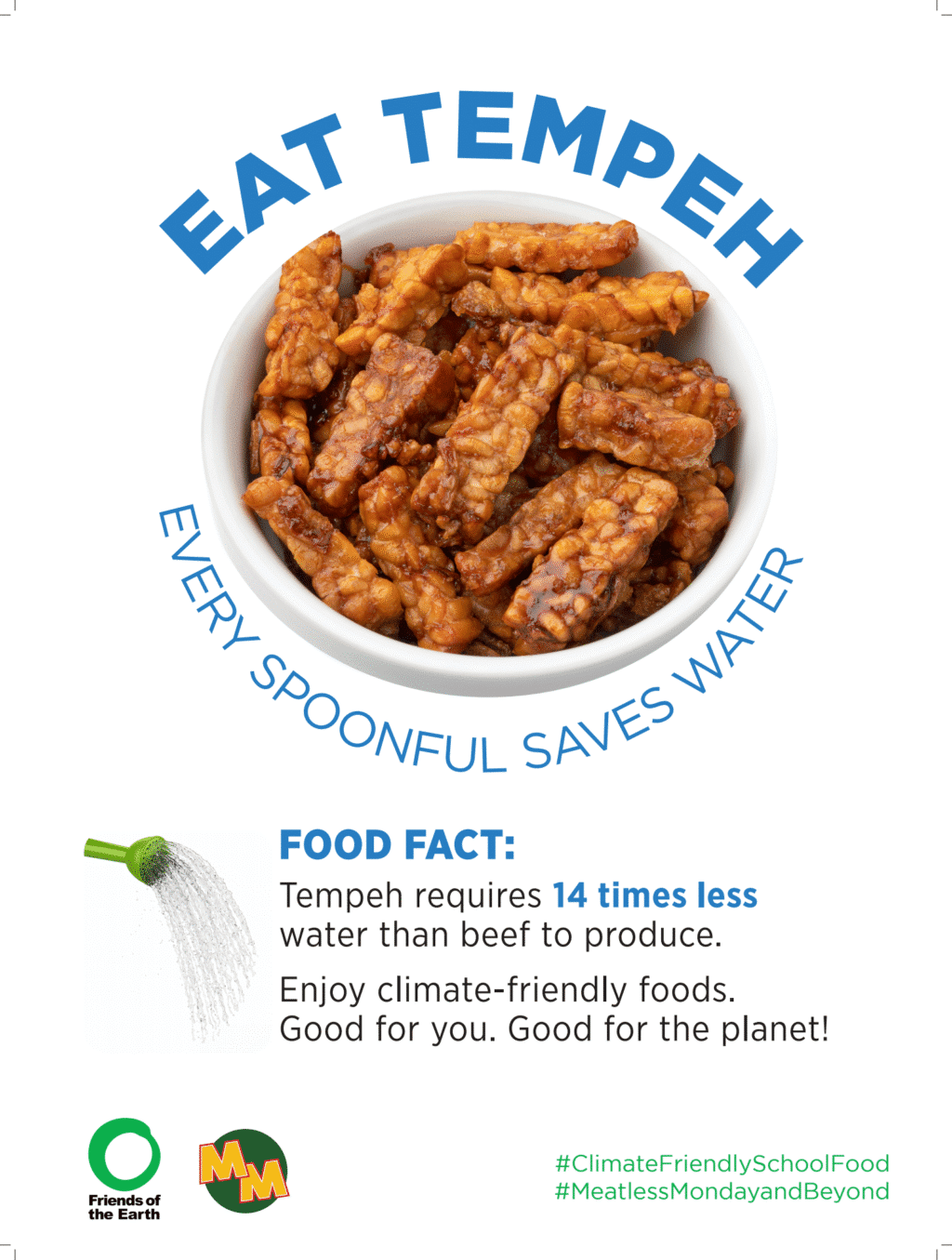
Our cafeteria posters (18x24in) can be printed in-house or externally in a large, high quality, 18×24 format.
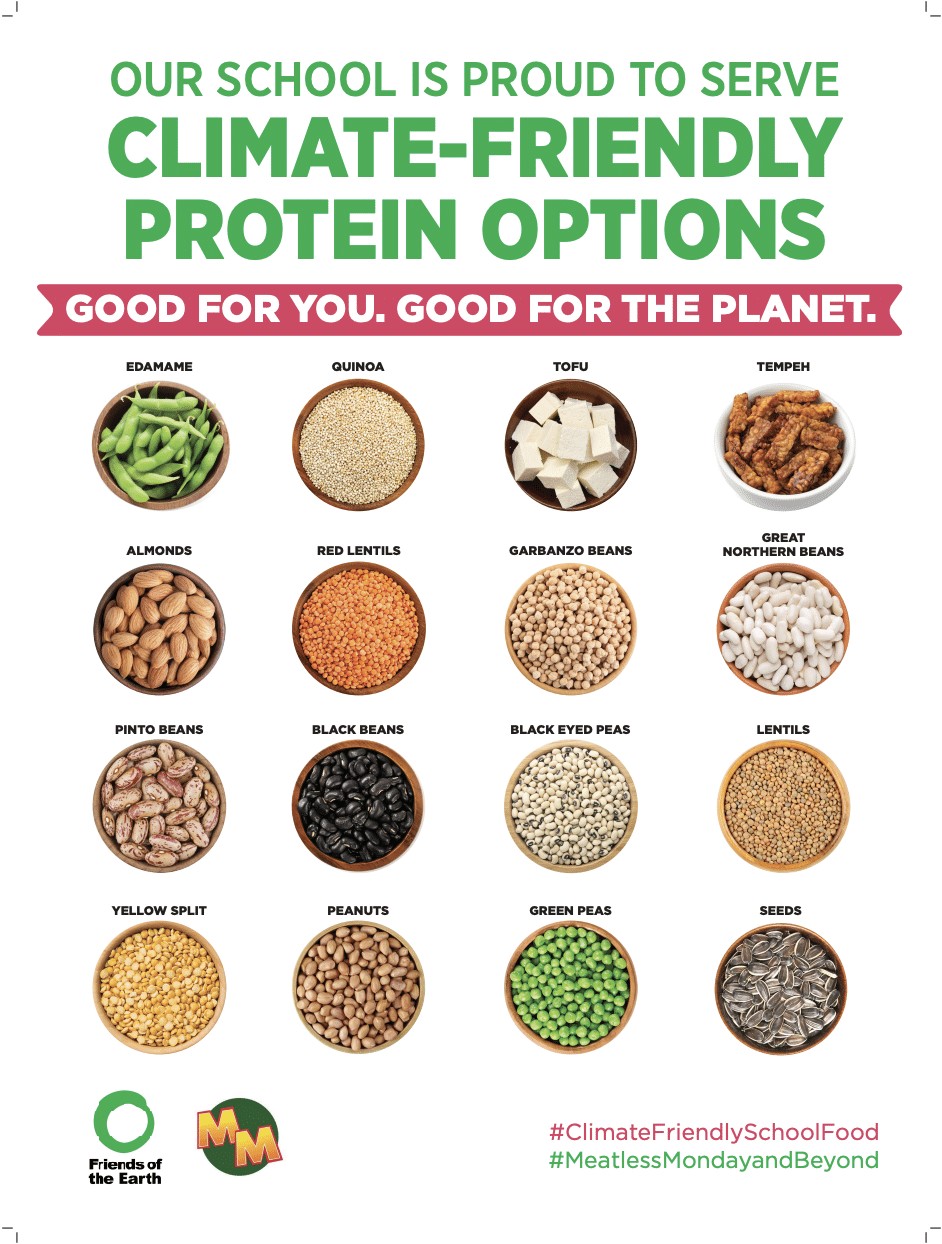
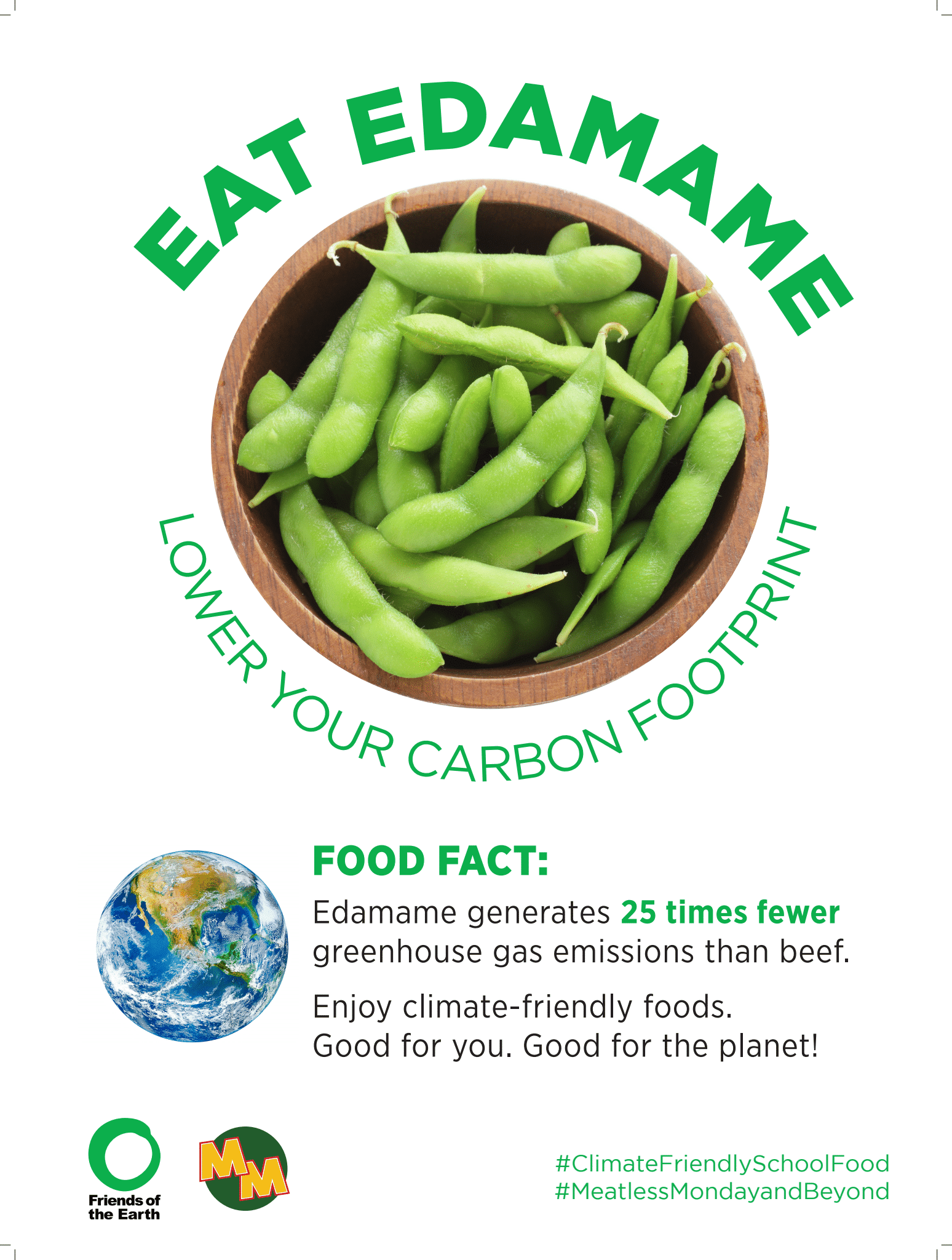
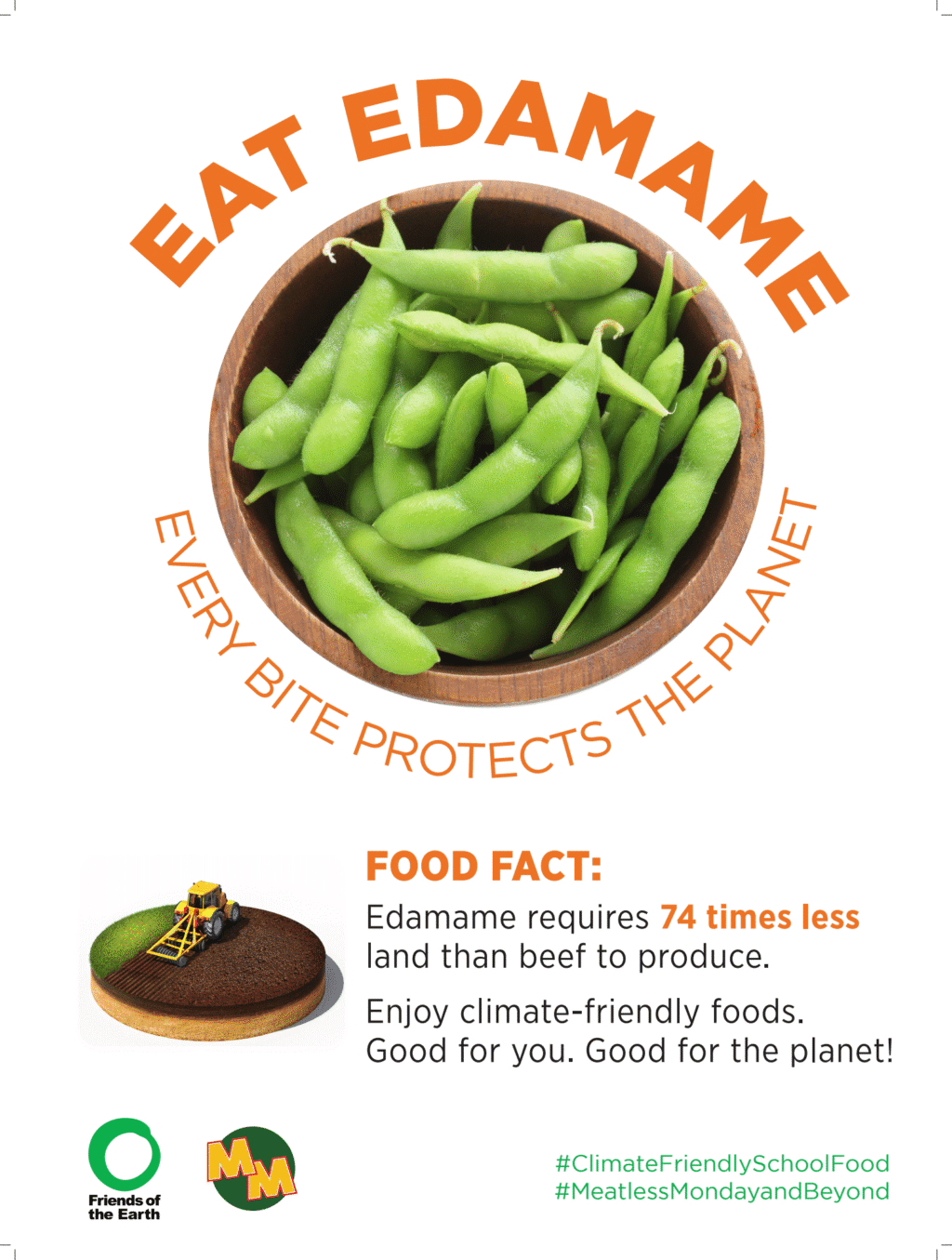
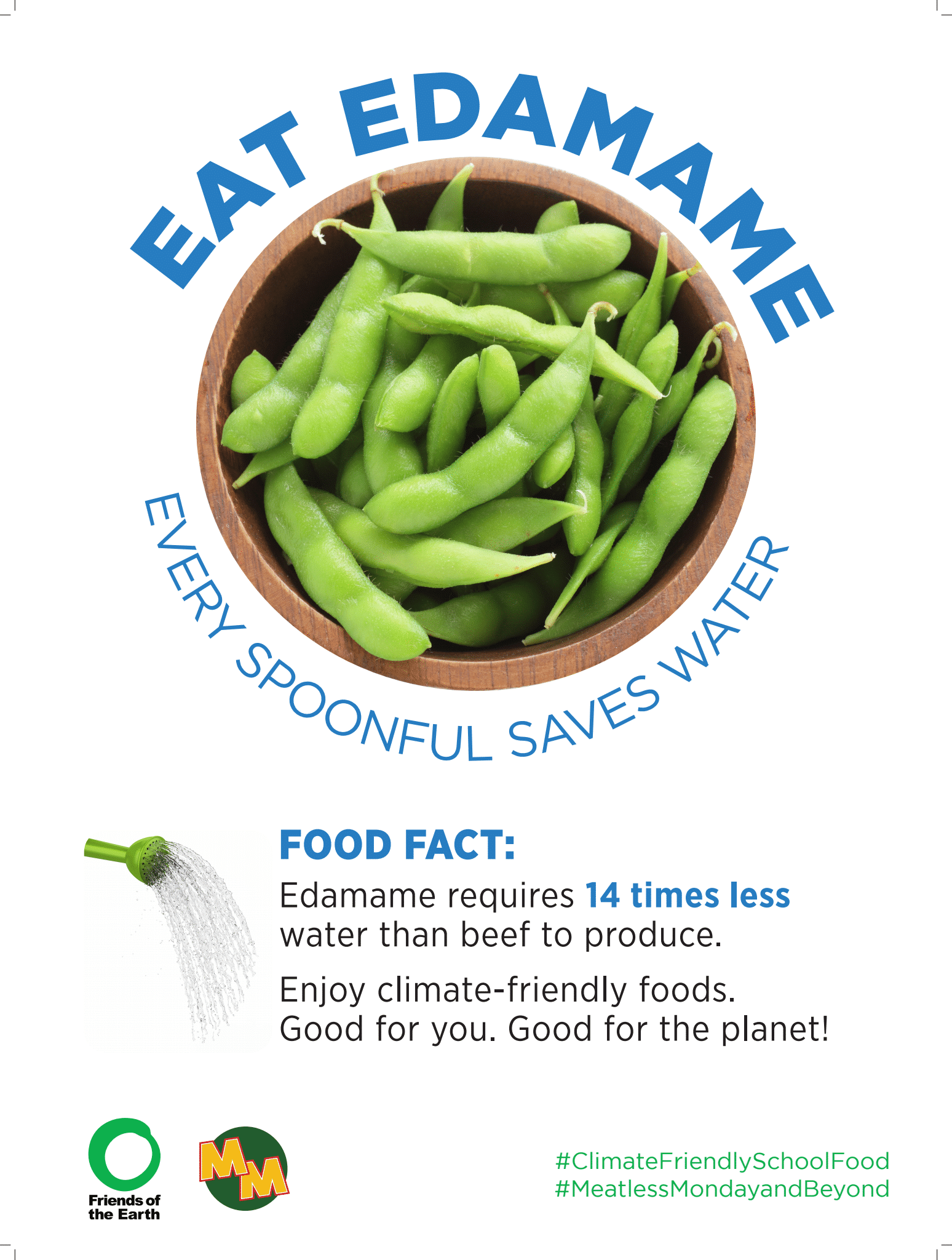
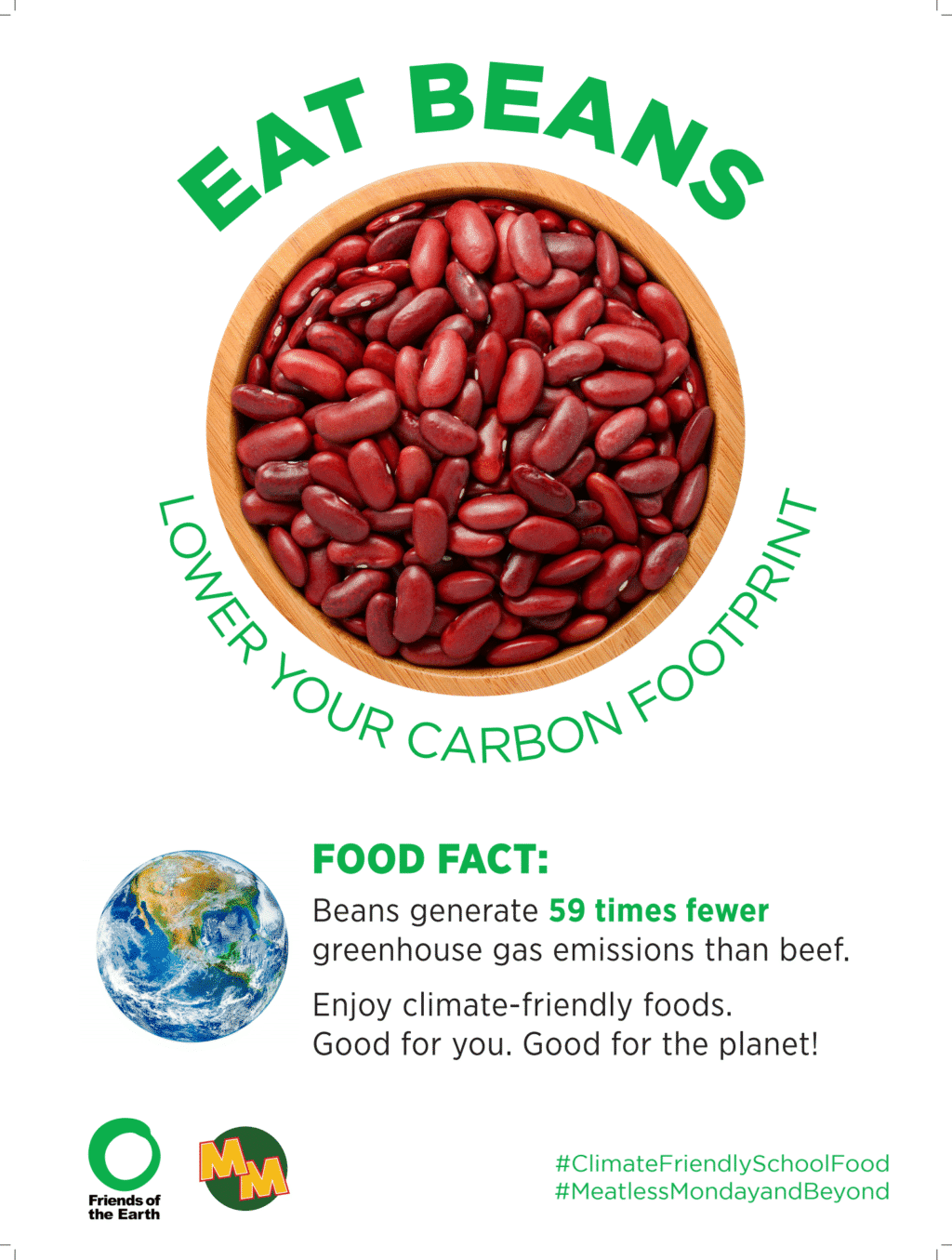
We highlight six common plant-based proteins (tofu, lentils, chickpeas, beans, tofu, and edamame), and highlight the land, water, and carbon emissions savings of using these proteins.