


Genetically Engineered Livestock
Overview
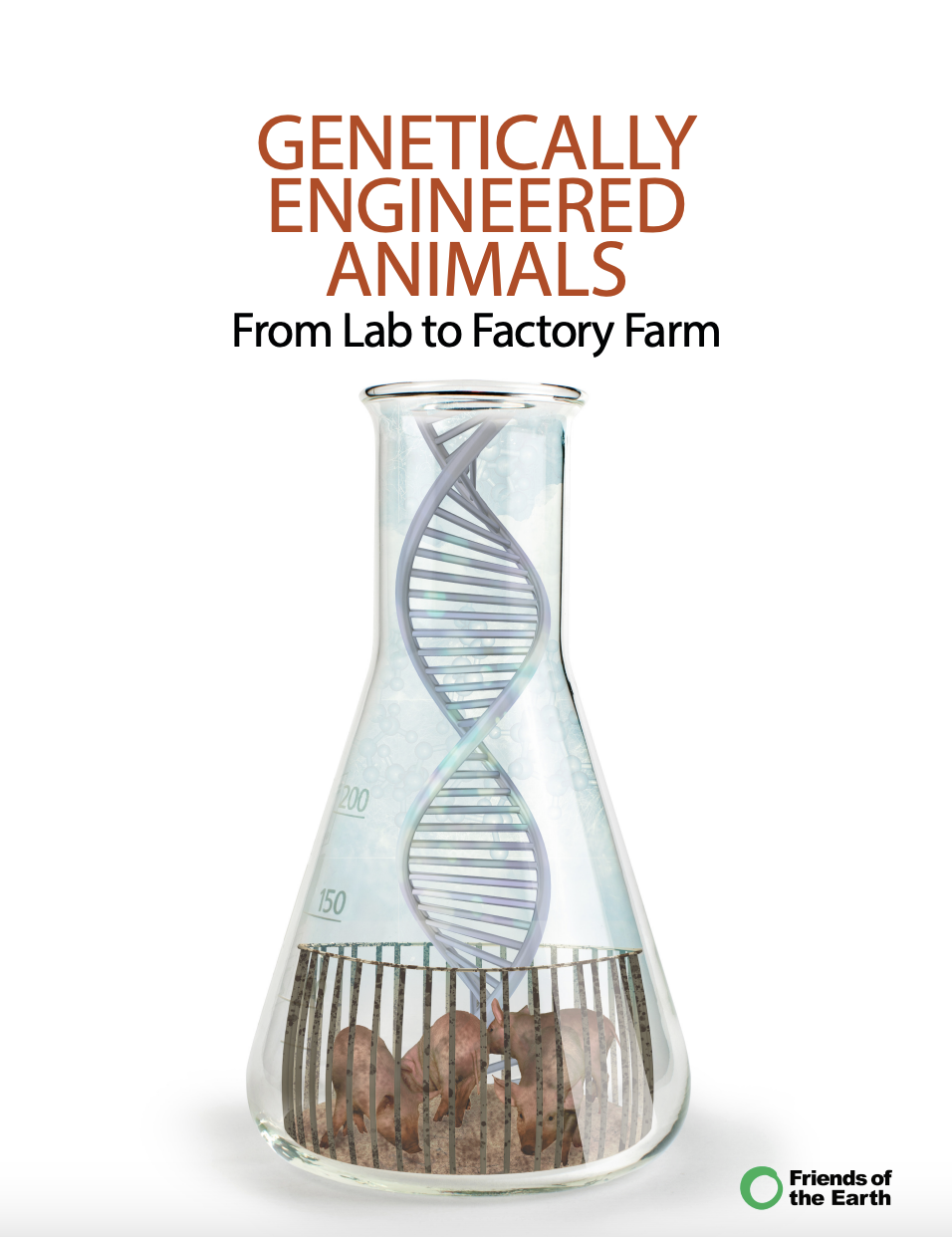
As climate change, biodiversity loss, and public health threats intensify, the food system urgently needs transformative solutions rooted in sustainability, animal welfare, and environmental justice. Instead, genetically engineered (GE) animals are being developed to reinforce the industrial factory farm model — engineering animals to better survive overcrowding, disease, and extreme conditions rather than addressing the root causes of harm.
Friends of the Earth’s reports reveal serious concerns about animal suffering, public health risks, inadequate regulation, and the growing normalization of factory farming through biotechnology.
The reports document how genetic engineering and gene-editing techniques can result in unintended mutations, developmental abnormalities, and animal welfare harms, while federal oversight remains fragmented, opaque, and heavily reliant on industry-generated data. At the same time, genetically engineered livestock may introduce new risks related to antibiotic resistance, virus evolution, food safety, and ecosystem impacts.
Genetically engineered livestock represent a false solution to the crises caused by industrial animal agriculture. Rather than confronting overcrowding, pollution, and disease, these technologies entrench the factory farm model and shift risk onto animals, consumers, and ecosystems.
Friends of the Earth calls for a fundamentally different path — one rooted in agroecology, animal welfare, environmental justice, and public health. Well-managed pasture-based and organic systems can support healthy soils, protect biodiversity, reduce climate impacts, and eliminate routine antibiotic use.
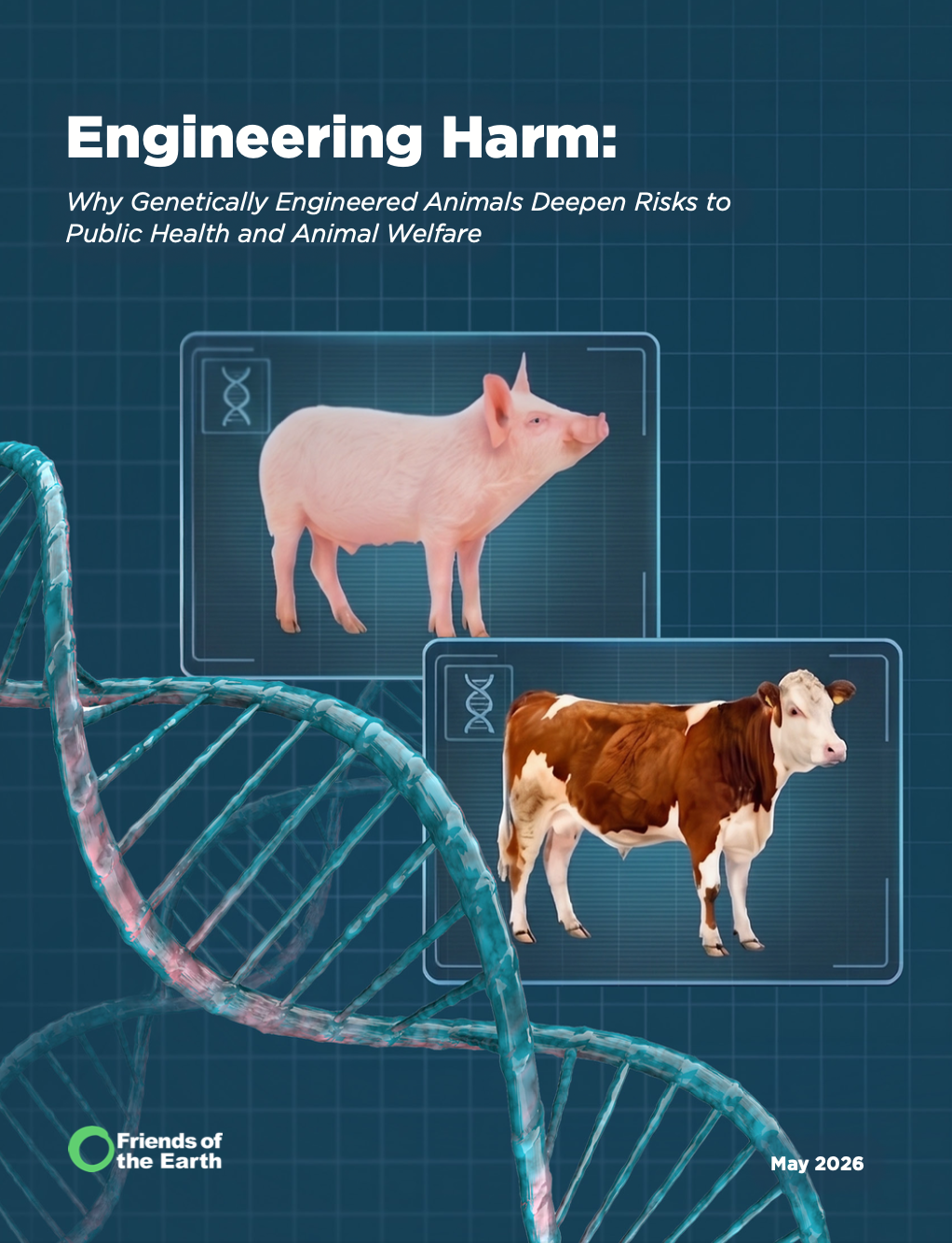
This brief is an update to our 2019 analysis, examining the three genetically engineered animals approved for human consumption in the United States between 2020 and 2025.
Key Findings
Animal welfare & human health concerns
- Animals are being genetically engineered to withstand the harsh conditions of factory farming instead of reforming harmful production systems.
- The development of GE animals involves invasive and inefficient processes such as cloning and micro-injection, resulting in high rates of embryo loss, animal suffering, genetic abnormalities, and death.
- Independent research shows that gene editing can cause unintended mutations and off-target genetic changes with unpredictable impacts on animal health and welfare.
- Disease-resistant animals may create evolutionary pressure that encourages viruses to become more virulent or transmissible.
Regulatory gaps
- Federal oversight of genetically engineered animals is fragmented across agencies, leaving major gaps in regulation and accountability.
- FDA oversight relies heavily on company-provided data, with little independent review, transparency, or meaningful public participation.
- Existing food safety assessments fail to adequately evaluate potential allergenicity, altered proteins, or long-term health impacts.
- USDA labeling rules may allow products from genetically engineered animals to enter the marketplace without clear on-package disclosure.
Recommendations
Friends of the Earth calls for a precautionary, transparent, and science-based approach to genetically engineered animals and urges policymakers to:
- Halt approvals of genetically engineered animals until comprehensive independent safety assessments are conducted.
- Require full public transparency and independent scientific review of all data submitted by biotechnology companies.
- Close regulatory loopholes that allow some genetically engineered animals to bypass full FDA review.
- Strengthen oversight of risks related to antibiotic resistance, virus evolution, food safety, and ecosystem impacts.
- Require meaningful animal welfare assessments throughout the development and commercialization process.
- Establish mandatory, clear on-package labeling for all food products derived from genetically engineered animals.
- Ensure robust opportunities for public participation before approvals are granted.
- Invest in agroecological, pasture-based, and organic farming systems that improve animal welfare, reduce pollution, protect biodiversity, and strengthen climate resilience.
Conclusion
Genetically engineered livestock are not a solution to the crises created by industrial agriculture. They represent a technological expansion of the factory farm model — one that shifts risks onto animals, consumers, farmers, and ecosystems while failing to address the underlying drivers of harm.
The future of food must be built on sustainable farming systems that protect public health, respect animal welfare, support biodiversity, and advance environmental justice — not genetic shortcuts that deepen dependence on industrial agriculture.
Ways to Support Our Work

Read Latest News
Stay informed and inspired. Read our latest press releases to see how we’re making a difference for the planet.

See Our Impact
See the real wins your support made possible. Read about the campaign wins we’ve fought for and won together.

Donate Today
Help power change. It takes support from environmental champions like you to build a more healthy and just world.